AI藤蔓植物绘画:缠绕生长与绿意盎然的自然生态视觉呈现
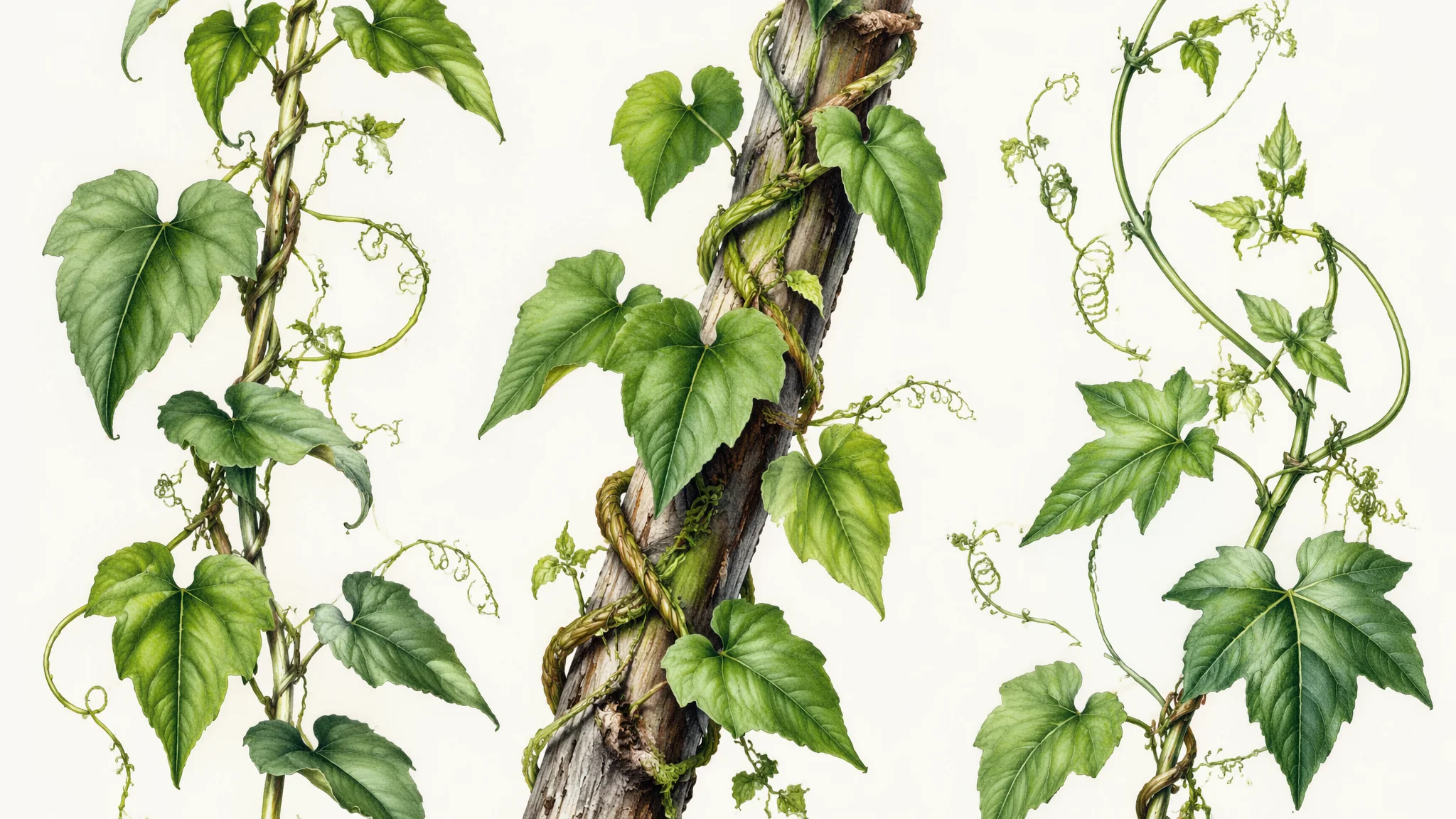
简单说:AI画藤蔓最容易翻车的地方是"缠绕方向没有逻辑"——藤蔓应该是绕着某个轴螺旋上升的,但AI经常把藤蔓画成随意交叉的绿线,完全没有植物学上的缠绕规律。真正好看的藤蔓图要在prompt里控制三个维度:缠绕逻辑(clockwise or counterclockwise spiraling, twining around support)、叶片分布(alternating leaves at nodes, not random scattered)、生长场景(爬墙、攀架、垂吊、缠绕树干四种场景的prompt完全不同)。
帮一个园艺品牌做过藤蔓植物的产品目录配图。起初觉得藤蔓有什么难的,不就是绿色的爬藤嘛——结果被打脸了。AI画藤蔓最大的坑是——它不理解"缠绕"的物理逻辑。藤蔓植物在自然界中的缠绕是遵循固定规律的:右旋藤蔓(如忍冬)顺时针缠绕、左旋藤蔓(如牵牛花)逆时针缠绕、卷须类(如葡萄)靠触手抓握。AI把所有这些简化成了"绿色的曲线",画出来的藤蔓像装饰彩带而不是活植物。
第一步:四种藤蔓植物的品种特征
AI画藤蔓要按品种分开写prompt:常春藤(English ivy, lobed leaves, aerial rootlets clinging to wall)、葡萄藤(grapevine, tendrils wrapping around support, large palmate leaves, hanging fruit clusters)、紫藤(wisteria, cascading purple flower clusters, twisting woody trunk)、爬山虎(Virginia creeper, five-lobed leaves, suction cup tendrils, turns red in autumn)。四种藤蔓的叶型、攀爬方式、生长形态完全不同。
四种藤蔓的prompt对照——
| 品种 | 叶型特征 | 攀爬方式 | 关键prompt词 |
|---|---|---|---|
| 常春藤 | 三到五裂、革质光泽 | 气生根附着墙面 | English ivy, lobed glossy leaves, aerial rootlets gripping brick wall, dense coverage |
| 葡萄藤 | 掌状大叶、卷须 | 卷须缠绕支架 | grapevine, curling tendrils wrapping around wooden trellis, palmate leaves, grape clusters hanging |
| 紫藤 | 羽状复叶、蝶形花 | 木质茎螺旋缠绕 | wisteria vine, cascading purple flower racemes, twisted woody trunk, pergola covered |
| 爬山虎 | 五小叶掌状、秋天变红 | 吸盘触须爬墙 | Virginia creeper, five-lobed compound leaves, suction cup tendrils on brick wall, autumn red foliage |
葡萄藤和紫藤是最受欢迎的两种藤蔓题材。葡萄藤有"田园丰收"的联想(葡萄果实+绿叶+木质支架=欧洲田园),紫藤有"浪漫梦幻"的联想(紫色花瀑+古老藤架=日式庭院)。常春藤和爬山虎更偏"岁月感"——爬满墙的藤蔓暗示建筑有年头了。
第二步:缠绕逻辑——AI最难理解的部分
藤蔓的缠绕方式有三种:螺旋缠绕(stem spiraling around a vertical support, clockwise twining)、卷须抓握(thin tendrils reaching out and coiling around thin supports like wire)、气生根附着(small rootlets growing from stem adhering flat to wall surface)。三种缠绕方式的prompt关键词完全不同。
缠绕逻辑的三层prompt——
螺旋缠绕型——"vine stem spiraling tightly around a wooden pole in clockwise direction, each complete spiral at regular 15cm intervals, leaves emerging at nodes along the spiral"
卷须抓握型——"thin curling tendrils extending from main vine, coiling tightly around wire trellis like a spring, new tendrils reaching out searching for support"
气生根附着型——"tiny aerial rootlets emerging from stem, clinging flat against brick surface, roots wedging into mortar cracks, creating a natural tight adhesion to wall"
说个翻车经历——画葡萄藤的时候我写了"grapevine on trellis",AI把藤蔓画成蛇一样盘在架子上,完全没有卷须。卷须是葡萄藤的识别特征,没有卷须的葡萄藤看着像假的。后来加"thin spring-like tendrils wrapping around wire supports"才出对效果。
缠绕逻辑对AI来说很难——因为这是三维空间中的螺旋运动,而AI本质上是二维图像生成器。改善方案是用SDXL+ControlNet depth map给藤蔓提供一个明确的支撑物深度图,让AI有"绕着什么转"的空间参考。这个技巧和 AI绘画制作全流程 里的结构控制方法一致。
第三步:叶片的光影——藤蔓的"透气感"
藤蔓的叶片不是不透明的绿色贴纸——阳光会穿透叶片(translucent leaves with light shining through, visible leaf veins in backlight)、叶片之间有缝隙让光线通过(dappled light through foliage gaps)、不同层次的叶子有不同的绿色(foreground dark green, backlit leaves bright yellow-green)。三个光影特征写到位,藤蔓才不是一团绿。
叶片光影的prompt写法——
"sunlight filtering through vine leaves creating dappled light patterns on wall below, backlit leaves glowing bright translucent yellow-green with visible vein structure, deep green shadow areas where leaves overlap, not flat green mass, layered depth through varying leaf translucency"
这组prompt里最关键的词是"translucent"和"backlit"——逆光叶片是藤蔓画面中最出彩的视觉元素。AI如果不理解叶片透光,就会把藤蔓画成一堵绿墙。加上逆光效果后,藤蔓立刻有了"空气感"和"呼吸感"。
叶片光影的处理逻辑和 桃花树绘画 里的花瓣透光处理是同一个原理——植物的美很大程度上来自光线穿透薄组织的效果。
第四步:四种生长场景的prompt设计
藤蔓的生长场景决定了画面构图和氛围:爬墙(covering old brick wall, urban nature reclaiming)、攀架(wooden pergola with hanging vines, garden shade)、垂吊(hanging vine curtain from balcony, vertical garden)、缠绕树干(ancient tree trunk wrapped in ivy, forest symbiosis)。四种场景的视觉重点完全不同。
四种场景的prompt——
爬墙——"a weathered red brick wall covered asymmetrically with English ivy, roots gripping into mortar cracks, some windows partially visible through leaves, urban nature aesthetic, soft overcast light"
攀架——"a wooden pergola densely covered with wisteria, long purple flower clusters hanging down creating a natural ceiling, dappled sunlight through gaps, garden bench underneath, romantic Mediterranean garden atmosphere"
垂吊——"a balcony edge with cascading vines hanging down like a green curtain, variety of trailing plants, sunlight backlighting the hanging leaves, urban jungle aesthetic, vertical depth"
缠绕树干——"an ancient oak tree trunk with thick ivy vines spiraling up, symbiotic forest relationship, moss on bark, dappled forest floor light, fairy tale woodland atmosphere"
爬墙和垂吊是现代城市景观中最常见的藤蔓应用场景,攀架和缠绕树干更偏自然或园林场景。场景选择直接决定画面的情感基调。场景叙事的逻辑和 AI绘画灵感获取 中的环境设计思路一致。
第五步:工具与参数建议
藤蔓题材的工具对比——
| 工具 | 叶片层次 | 缠绕逻辑 | 光影透射 |
|---|---|---|---|
| Flux Dev | ★★★★★ | ★★★★ | ★★★★ |
| Midjourney V7 | ★★★★ | ★★★ | ★★★★★ |
| SDXL+植物LoRA | ★★★★ | ★★★★ | ★★★ |
Flux在植物细节上表现优于Midjourney——叶脉纹理、卷须的精细度、叶片边缘的锯齿都更准确。Midjourney的藤蔓图氛围更好但植物学准确性不如Flux。如果做园艺产品图选Flux,如果做氛围壁纸选Midjourney。参数建议分辨率1200x1600竖构图(藤蔓天生适合竖构图),CFG=5-6。
根据 Garden Center Magazine关于AI植物可视化的报道,北美和欧洲的园艺零售商中超过 25% 已在2025年开始使用AI生成植物视觉素材,藤蔓和攀缘植物是使用频率最高的品类之一。另据 Architecture & Design关于亲生物设计的AI趋势报告,藤蔓植物在室内设计效果图中被AI调用的频次年增长 40%,是"亲生物设计"趋势中最核心的植物元素。
常见问题
AI画的藤蔓为什么总是一团乱麻?
因为AI不理解缠绕的规律,把藤蔓当成随机交叉的线条。写清楚缠绕方向和支撑物——"vine spiraling clockwise around a vertical pole, leaves at regular nodes, not random tangle"。缠绕逻辑见 本篇 第二步。
怎么区分AI画的常春藤和爬山虎?
常春藤写"lobed evergreen leaves, aerial rootlets on wall";爬山虎写"five-lobed compound leaves, suction cup tendrils, turns red"。叶型是识别关键。品种辨析参考 桃花树绘画 的品种特征对照法。
怎么让藤蔓叶片看起来有透光感?
加"backlit translucent leaves, sunlight filtering through foliage, bright yellow-green glow on sun-facing leaves"。逆光是藤蔓图从"一团绿"升级到"有呼吸感"的关键。透光技巧见 桃花树绘画 的花瓣透光方法。
藤蔓图适合哪些设计应用?
园艺产品包装、餐厅绿墙效果图、婚礼请柬边框装饰、建筑效果图立面绿化、自然主题壁纸。商用前注意品种准确性(园艺产品不能用错品种)。商用版权见 AI绘画原创性解读。
画藤蔓让我对自然界的"生长逻辑"有了全新的敬畏。一棵藤蔓知道自己要往哪里爬——趋光、避风、找支撑——它不是随机生长的。AI画藤蔓最大的问题就是它不知道藤蔓是有"意图"的,画出来的是"看起来像藤蔓的装饰"。真正的藤蔓每一寸缠绕都是它和环境博弈的结果,这个博弈过程才是藤蔓最迷人的地方。
觉得这篇有用,分享给需要用AI画藤蔓植物的朋友吧。