AI火锅美食绘画:沸腾麻辣与中式聚餐氛围的食欲视觉呈现
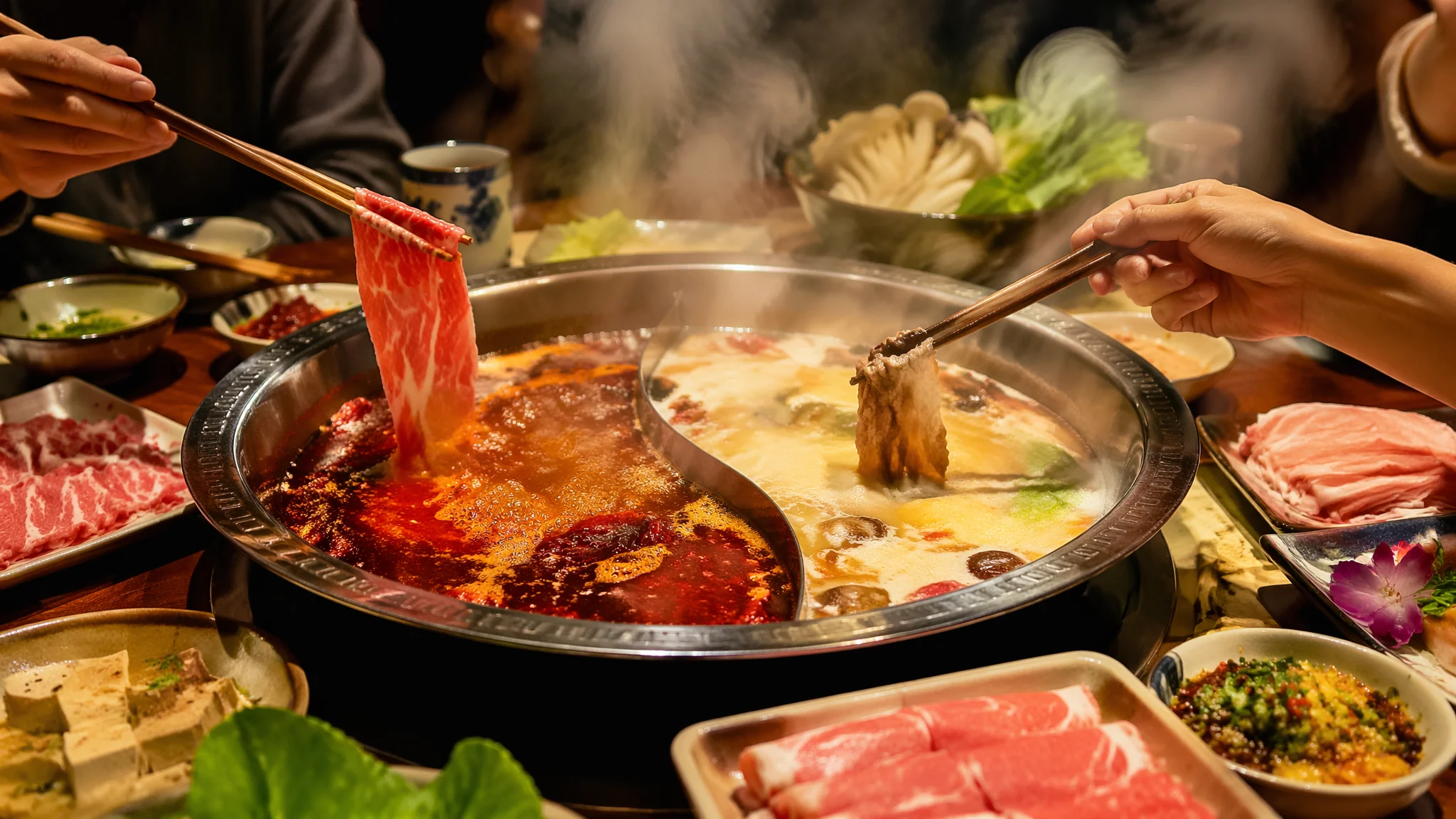
简单说:AI画火锅最大的难点不是锅——是"沸腾感"。一锅红油静止不动像凝固的颜料,完全激不起食欲。我在重庆吃了十几年火锅,太清楚真正的火锅长什么样了:翻滚的红汤带着气泡从锅底往上冲、花椒和辣椒在汤面上打转、白色的蒸汽一团一团地往人脸上扑。这些动态细节是AI火锅绘画的"食欲开关"——打开了就是让人流口水的美食大片,关上了就是一锅红色液体上面漂着几片菜叶。
我是重庆人,从小吃火锅跟喝水一样日常。大学去北方读书,第一次看到清汤白锅的"火锅"的时候整个人是懵的——那锅底清澈见底,几片番茄和葱段浮在水面上,我差点问服务员"汤是不是忘放底料了"。这段文化冲击后来变成了我写AI火锅Prompt的底层框架:火锅不是一道菜,是一种社交仪式。"一个人吃火锅"和"一群人抢毛肚"的气场天差地别。AI能画出锅里的食材,但画不出"五六双筷子同时在锅里捞"的那种拥挤感和热闹感——那是火锅的灵魂。
锅底的两大流派——红油麻辣锅与清汤鸳鸯锅的视觉配方
红油锅底的视觉核心是"油亮"和"沸腾"——汤面要像一面晃动的红镜子;清汤锅底的核心是"透亮"和"鲜美"——汤色清澈见底但食材满满。红油麻辣锅的Prompt:"a traditional Sichuan spicy hotpot, the pot is divided into nine-grid sections, the broth is a deep crimson red with a thick layer of chili oil floating on top, Sichuan peppercorns and dried red chilies bobbing on the surface, fierce bubbling action with broth splashing against the metal pot walls, visible steam rising in thick white clouds"。清汤锅:"the clear broth side of a mandarin duck hotpot, translucent golden chicken bone broth with goji berries, red dates, and scallion segments floating, the broth is gently simmering with small bubbles rather than a violent boil, slices of daikon radish and corn visible beneath the surface"。鸳鸯锅是两种视觉状态的并置——一边狂暴、一边温柔,这个对比本身就是很好的构图元素。关于中餐美食的AI创作体系,AI美食绘画完全指南有一套从选材到布光的完整流程。
涮品食材的质感还原——鲜红牛肉卷到翡翠绿蔬菜
火锅食材的"新鲜感"是画面食欲的核心——牛肉要鲜红带霜降纹、毛肚要脆弹有颗粒感、蔬菜要带着水珠的翠绿。牛肉卷:"thinly sliced premium beef rolls arranged on a white porcelain plate, the meat is deep red with beautiful white marbling throughout, partially frozen so the slices hold their curled shape, a few slices draped over the edge of the plate showing their paper-thin transparency"。毛肚:"fresh tripe neatly arranged on a plate, the signature spiky texture clearly visible on the surface, each piece has a slight natural curl at the edges, glistening with a light coating of water from being washed"。蔬菜拼盘:"a bamboo basket filled with an assortment of fresh vegetables for hotpot, vibrant green tonghao, crisp white lotus root slices with their distinctive hole pattern, golden needle mushrooms bundled together, water droplets still clinging to the leaves"。食材的关键词要有"触觉"——不只是颜色和形状,还有温度(partially frozen)、湿度(glistening with water)、质感(paper-thin, spiky)。因为在视觉上,这些触觉描述会转化为光泽、纹理和透明度。关于食材细节的渲染,AI诱人美食绘画技法中有更多食物质感的深度讲解。
蒸汽与烟雾——火锅氛围的视觉引擎
蒸汽画好了火锅就"活了"——不是一团白雾,而是有方向、有层次、有光打在上面的半透明气流。我的蒸汽Prompt写法分三个层次:"a column of white steam rising from the boiling hotpot, the steam is dense and opaque near the pot surface but becomes wispy and translucent as it rises, warm amber light from the restaurant lamps catching the steam and making it glow from within like illuminated fog, the steam partially obscuring the faces of diners on the opposite side of the table creating a dreamy atmospheric effect"。不要在Prompt里打断"steam"就收手——写出蒸汽的方向(rising)、密度变化(dense near pot, wispy above)、以及与灯光的交互(catching light, glowing from within)。这三层描写出来,蒸汽就从"一团白"变成了"一道光"。关于蒸汽烟雾这类半透明介质的渲染,AI温暖氛围场景绘画中的光影处理手法可以迁移应用。
聚餐场景的人物群像——火锅的灵魂是人
没有人围着的火锅只是"一锅汤"——人物群像才是火锅绘画的叙事核心。画火锅聚餐场景有几个要点。第一是手的动作——筷子伸向锅里、漏勺捞起食材、手在调蘸料——这些动作暗示"吃正在进行中"而不是"摆拍"。Prompt写法:"a group of friends gathered around a bubbling hotpot, multiple pairs of chopsticks reaching into the pot from different angles, one person is dipping a slice of meat into their personal sesame oil dipping bowl, another is scooping out a shrimp ball with a wire strainer, hands in motion with slight blur suggesting the liveliness of the meal"。第二是桌面丰富的配料:蒜泥、香油、蚝油、香菜末、小米辣——这些蘸料小碟是画面的色彩点缀。第三是背景环境的火锅店特色:红灯笼、木桌、长条凳、墙上挂的辣椒串。所有这些元素加起来,才是一张"完整的火锅图"而不是"一锅食材的特写"。关于多人场景的构图控制,可以参考AI聚餐美食场景绘画中的人物布局方法。
调味料与配料——画面的色彩和细节补充
好的火锅图,蘸料台也是一场视觉盛宴——芝麻酱的浓稠褐色、辣椒油的透亮红色、香油的琥珀色、葱花的翠绿——这些色彩拼在一起就是天然的调色盘。蘸料桌的Prompt:"a condiment station at a hotpot restaurant, rows of small ceramic bowls containing various dipping sauce ingredients, golden sesame oil shimmering in one bowl, dark soy sauce in another, a mound of finely minced garlic, fresh chopped scallions creating a vibrant green accent, bright red chili oil with chili flakes settled at the bottom, a jar of sesame paste with a wooden spoon sticking out"。这些小配料在画面中充当"视觉锚点"——它们在构图中分散开来,用自己的色彩和质感打破大面积的红色锅底,让画面有了节奏感。我每次在重庆的火锅店都会先站在蘸料台前面发呆半分钟——不是选择困难,是真的觉得那些瓶瓶罐罐的颜色搭配太好看了。关于食物色彩搭配的美学逻辑,可以看看Food & Wine杂志的美食摄影栏目,他们对食物色彩的掌控堪称教科书级别。另外Eater美食媒体的餐厅摄影专题也展示了大量真实的火锅用餐场景,对氛围描写很有参考价值。
火锅视觉的地域差异——川渝vs潮汕vs日式
不同地方的火锅视觉风格差异巨大——川渝火锅的红油暴力美学、潮汕牛肉火锅的清淡精致、日式寿喜烧的酱汁温润,三者Prompt写法完全不同。川渝风的视觉关键词是"辣"和"热闹"——红油、辣椒、花椒、九宫格、拥挤的小店。潮汕牛肉火锅则强调"鲜"和"匠气"——透明玻璃厨房里师傅在现切牛肉、清汤锅里只有几片白萝卜和玉米、牛肉按照部位(吊龙、匙柄、胸口油)分盘装好,每盘标着涮几秒。日式寿喜烧是"甜"和"仪式感"——浅口铸铁锅里酱油色的汤汁、牛肉片在锅里煎烤而非涮煮、旁边摆着生鸡蛋作为蘸料、整体的色彩是酱色和暖黄的温润调子。火锅是个大类目,先定地域再写Prompt,方向不会乱。对外来美食的文化适应性创作,可以参考AI烧烤美食绘画中关于不同地域烧烤文化的视觉分化思路。
常见问题
AI画的火锅总是看起来很"平"没有食欲感怎么办?
食欲感来自三个维度:光泽(油亮)、蒸汽(动态)、色彩对比(红配绿)。检查你的Prompt有没有覆盖这三个维度——"glossy chili oil surface with specular highlights""thick steam rising dynamically""bright red broth contrasting with vibrant green vegetables"。三者齐全,食欲感基本就到位了。
怎样让火锅图里的食材看起来更新鲜?
加"水珠"和"光泽"——"fresh vegetables with visible water droplets, the meat has a natural glossy sheen indicating freshness, the ingredients look like they were just prepared moments ago"。新鲜约等于湿润加反光。
火锅店里的人物太多了画面很乱怎么办?
用浅景深把背景人物虚化——"shallow depth of field, the hotpot and immediate surrounding hands in sharp focus, diners in the background rendered as warm bokeh shapes, the blur creating a sense of intimacy at the focal table"。焦点锁定在火锅和最近的一两双手上,其他都用光学虚化处理。
一锅红汤,几盘鲜肉,三五好友——火锅画的就是这股子热腾腾的人间气。AI给你锅底,你往里面加故事。