AI魔镜主题绘画:童话奇幻与镜面反射的创意视觉设计
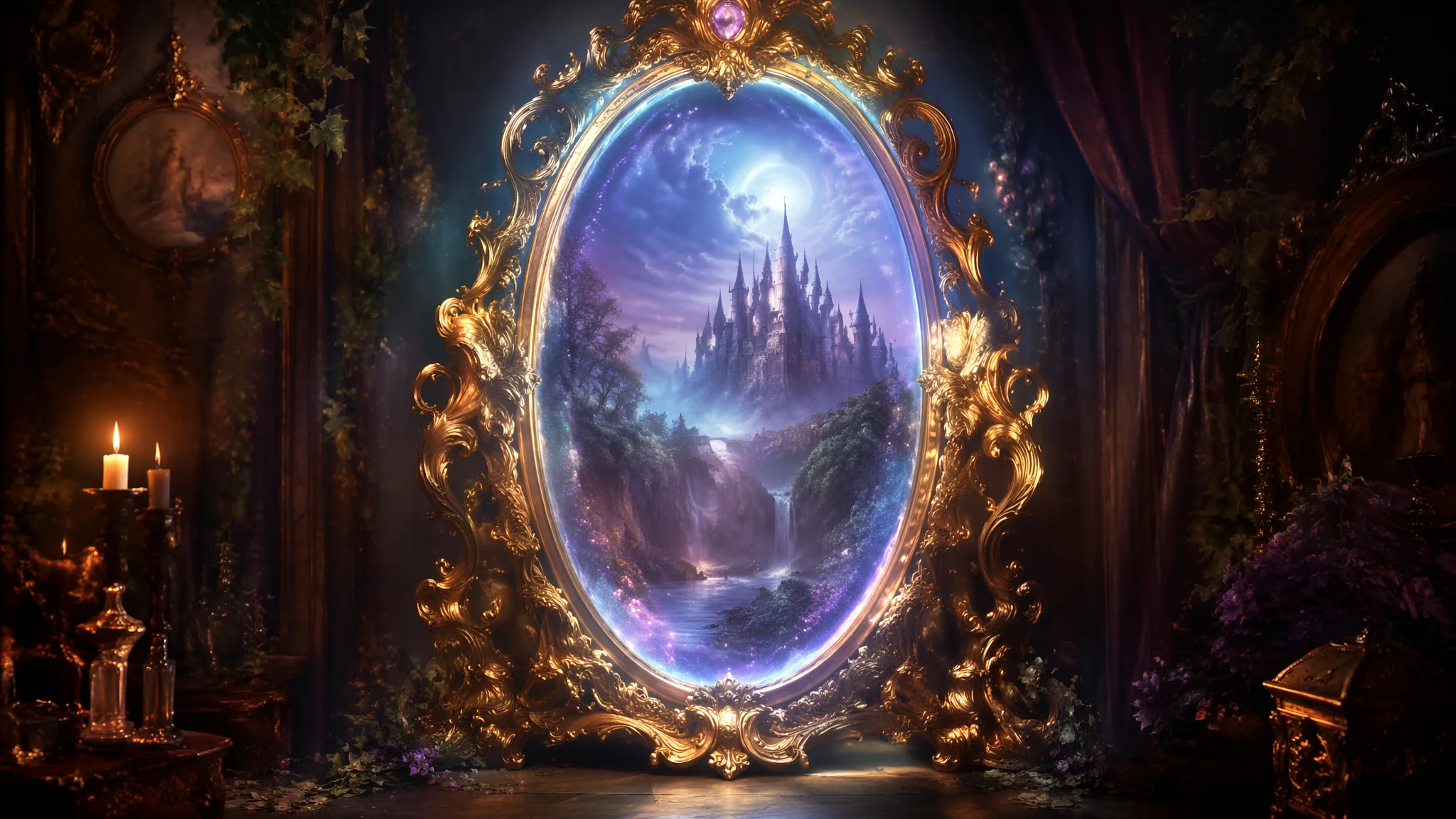
简单说:AI画"魔镜"主题最核心的技术难点就两个——镜面反射的真实感和奇幻元素之间的平衡。反射太真实就变成了普通镜子,太奇幻又看不出是镜子。找到这个平衡点,魔镜主题就成功了一大半。
我是被女儿拉入坑的。她说想画一个"能照出另一个世界的镜子",我们俩折腾了一个下午。刚开始我写"a magic mirror reflecting a fantasy world",AI倒是给了一个镜框里面装了一个奇幻场景——但完全没有"反射"的感觉,更像是镜框里嵌了一张画。后来我女儿说了一句让我醍醐灌顶的话:"爸爸,镜子应该还能看到一点点我们这个世界的倒影啊。"对——真正的魔镜,是现实和幻境的交界处,不是纯粹的幻境。
提示词的结构:镜框 + 反射内容 + 过渡区域
魔镜提示词必须分三层写:镜框的材质和风格、镜中的奇幻内容、以及镜面边缘的过渡效果——缺一层就会少了灵魂。镜框层用"ornate gothic mirror frame with intricate carvings""ancient bronze mirror with verdigris patina""cracked antique mirror with weathered gold frame"。反射层是重点——奇幻内容要具体:"reflecting a lush enchanted forest with glowing mushrooms and floating lights""mirror showing a star-filled galaxy with nebula clouds swirling inside""the reflection reveals an underwater kingdom with merfolk and coral palaces"。最关键的是过渡层,新手最容易漏掉:"the boundary between reflection and reality blurs at the edges""reality dissolving into the mirror world at the frame border""water-like rippling surface where the mirror meets our world"。三层齐了,魔镜的"魔法感"就出来了。关于奇幻场景的更多技巧,AI创意实验绘画风格探索里有成体系的拆解。童话视觉符号的研究可以参考Wikipedia上关于童话故事的词条,了解不同文化中"魔镜"原型的演变对创作很有帮助。
对称构图是魔镜主题的天然搭档
魔镜主题天然适合对称构图——镜子本身就是一个对称轴,左右镜像排列能强化"另一个世界"的幻觉。我跑过一个系列叫"镜中镜",用了一面巨大的落地镜立在画面正中央,左边是现实世界的灰暗色调,右边镜像里是色彩斑斓的魔法森林。提示词核心是"perfectly symmetrical composition, a full-length mirror splitting the scene in half, left side a monochromatic attic room, right side reflection showing a vibrant magical garden, the mirror frame as the dividing line"。这种强对称带来的视觉冲击力极强,第一次给朋友看的时候他们都愣了一下。对称构图的底层逻辑在AI几何抽象绘画里也讲到了——人类大脑对对称性有天然的愉悦反应。
镜面材质的质感关键词库
镜子的质感决定画面的气质——水银镜、铜镜、冰镜、黑曜石镜,每一种材质都有自己独特的视觉语言。水银古镜:"antique mercury glass mirror, mottled silver surface with dark spots, slightly distorted reflection, mysterious vintage atmosphere"。冰镜:"mirror made of magical ice, crystalline edges, frost patterns creeping across the surface, cold blue-white reflection with a soft glow"。黑曜石镜:"polished obsidian mirror, deep black reflective surface, dark purple undertones, mystical and ancient, reflecting shadowy figures"。液态镜面:"mirror surface like still water, gentle ripples at the touch point, the reflection undulating softly, dreamlike quality"。每种材质我都建议单独跑一批,找找你最喜欢的质感方向。材质表现能力在AI建筑与室内渲染里也有很多可借鉴的思路,毕竟材质渲染是相通的。Tate美术馆的超现实主义艺术词条对理解魔镜主题的"现实与幻境的边界"提供了丰富的视觉参考案例。
光影与情绪的联动:镜子里的不同"天光"
镜中世界的光线决定了整个画面的情绪基调——同一面镜子配上不同的镜中光线,能讲出完全不同的故事。晨光魔镜适合希望与开始的主题:"soft morning light filtering through the mirror, golden sunbeams illuminating dust particles floating between two worlds, warm hopeful atmosphere"。暮光魔镜适合神秘与告别:"twilight seeping through the mirror surface, purple and orange gradient sky reflected inside, melancholic quiet beauty, the last light of day"。月光魔镜适合魔法与秘密:"moonlight streaming through the mirror into a dark room, silver-blue luminescence, the mirror glowing faintly in the darkness, secret midnight magic"。暴风雨魔镜适合冲突与转折:"storm raging inside the mirror world, lightning flashes illuminating the reflection, dark turbulent clouds swirling, dramatic contrast with the calm room outside"。每种天光我都跑过对比测试——结论是镜中光线的色温和强度直接决定了观者把画面解读为"童话"还是"恐怖故事"。光线温度偏暖(3000K-4000K)= 童话治愈向,光线温度偏冷(6000K以上)= 哥特神秘向。这个发现对我后来的整个魔镜系列都有指导意义。
当镜子里的东西"溢出来"或者镜子本身"碎裂"——这两个场景是最有叙事张力的魔镜构图。溢出效果的核心提示:"magical elements spilling out from the mirror into the real room, glowing butterflies emerging from the mirror surface, vines growing out of the frame and crawling up the walls, the boundary between two worlds collapsing"。碎裂效果的写法:"shattered magic mirror, each shard reflecting a different fantasy world, glass fragments floating in mid-air, a hand reaching through the broken mirror from the other side"。这两种构图自带故事感,做插画和概念设计尤其好用。个人经验是溢出效果适合温暖治愈向,碎裂效果适合黑暗奇幻向。
常见问题
AI生成的镜子反射经常出现物理错误怎么办?
别指望AI能完美模拟光学反射——它本质上是模式匹配而非物理模拟。解决方案是:不要执着于物理正确的反射,把"不合理的反射"转化成"魔法的体现"。镜子里反射出不同的季节、不同的时代、不同的人——这种"错误"恰恰是魔镜主题的魅力所在。
魔镜风格适合哪些商业场景?
奇幻小说封面、角色扮演游戏的美宣图、主题展览的视觉海报、以及奇幻题材的儿童绘本。我见过一个独立游戏工作室用这类AI图做概念设计,省了至少两个原画师的钱。最近还发现一个有意思的应用方向——美妆品牌的视觉campaign。镜子天然和"美丽""审视自我"这些美妆关键词绑定,用魔镜主题做美妆广告比传统产品图有记忆点多得多。舞台剧和沉浸式展览的海报设计也是魔镜主题的绝佳落地场景,镜子本身的"另一世界"隐喻和戏剧天然契合。
如何让魔镜画面有"故事感"而不仅仅是"好看"?
加入一个正在和镜子互动的人物——照镜子的人、手伸进镜面的人、被镜中倒影惊吓的人。人物的存在立刻把一张"好看的背景图"升级成了"一个故事的一个瞬间"。试试在提示词里写"a young girl touching the mirror surface with curiosity""an old wizard gazing into a mirror showing his younger self",效果天差地别。还有一个高级技巧:在镜中反射里放入一个和现实场景"矛盾"的元素——比如现实是白天但镜中是夜空、现实是沙漠但镜中是海洋。这种矛盾会让观众本能地想"为什么",而"为什么"就是故事的开端。
觉得有用的话分享给朋友吧。