AI宅女角色绘画:居家慵懒与二次元文化中的女性日常生活视觉
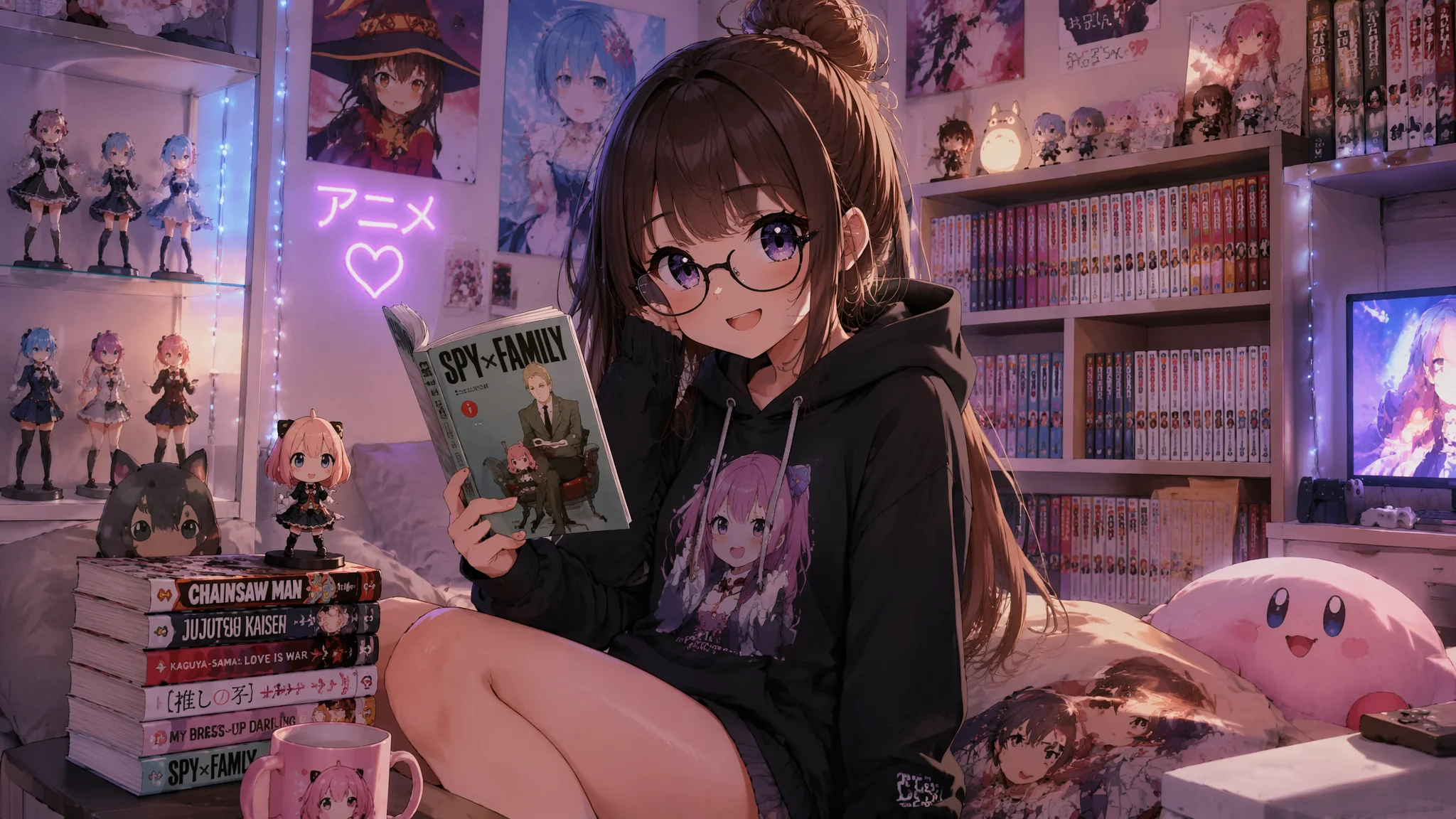
我室友是个标准的"二次元宅女"——手办柜比书柜大、显示器支架旁边永远摆着一杯泡面、周末的默认服装是一件洗到发白的动漫T恤加一条运动短裤。去年她生日,我用AI给她画了一张"宅女肖像"——她窝在电竞椅上打游戏、屏幕的光映在她脸上、背后是塞满手办的柜子、茶几上iPad在放番剧、一只猫趴在她膝盖上睡觉。她把那张图发到微博上,评论区炸了——"这不就是我吗?!""求问如何让男朋友给我画一张这样的""第三张图里那个手办柜——我好像看到了自己家。"那张图的技术含量其实不高——但我画对了"宅女"。不是"一个漂亮女孩穿着睡衣"——是"一个人在自己的小世界里舒服到不想出来"的状态。今天这篇就是把我画宅女角色的Prompt技巧和审美逻辑全部摊开。
宅女的灵魂不是"睡衣"——是"不设防"的身体语言
AI画宅女最容易踩的坑:把"在家"理解成"穿着性感睡衣在拍照"。出来的图不像宅女——像睡衣服装目录。真正的宅女身体语言核心就四个字:不设防、放松。什么叫不设防?sitting cross-legged on a gaming chair with knees tucked up、lying on stomach on the floor reading manga with feet kicking in the air、slouched deeply into a bean bag with snack crumbs on the shirt、one hand holding phone the other hand lazily petting a cat。这些姿势的共同点:不是"摆给谁看的"——是"没人看的时候你会用的姿势"。AI的默认审美是"随时在镜头前"——你需要在Prompt里明确打破这个默认。加candid moment, not aware of being watched, natural everyday posture, comfortable in her own space——告诉AI这不是时尚摄影,是偷拍视角。
身体语言的另一个关键:messy但不需要是"邋遢"。messy hair tied in a loose messy bun with strands falling out, slightly oversized T-shirt slipping off one shoulder without being sexy about it, mismatched socks, glasses pushed up on head。这些细节的信号是"我在自己家,我不需要看起来整齐"——不是"我故意弄乱头发来诱惑你"。尺度就在"无意识"和"有意识"之间——前者是生活,后者是摆拍。AI美少女绘画教程中关于自然表情和身体语言的技巧在这里完全适用——"不表演"比"表演"更难画,但更打动人。
宅女房间——不是背景,是角色的外延人格
宅女的房间不是"一个房间"——是这个角色的第二层皮肤。房间里每一件物品都在替她说:"我喜欢这个、我花时间在这个上面、这是我在乎的世界。"画好一个宅女角色,你必须在Prompt里画好她的房间。基础元素:gaming setup with dual monitors, RGB keyboard glowing purple, gaming headset hanging on monitor arm。ACG收藏:glass display cabinet filled with anime figurines and Gundam models, wall scroll of favorite anime series, manga bookshelf overflowing with volumes stacked horizontally and vertically。零食和饮料:half-empty bubble tea cup on desk, opened bag of chips, instant noodle cup with chopsticks sticking out。宠物(宅女标配):a lazy cat sleeping on the keyboard or a small dog curled up on a pile of laundry。这些物品不是"堆"进去的——是"长"在场景里的。关键Prompt词:lived-in messy but not dirty, organized chaos, personal clutter that tells a story。
房间的光线也是角色定义的一部分。白天宅女——soft daylight filtered through half-closed blackout curtains, dust particles in sunbeams, lazy afternoon vibes。夜晚宅女——only light sources are monitor glow and LED strips behind desk, cozy cave-like atmosphere, sense of being in her own world。每个人选择不同的光就是在选择不同的"宅"——下午光是治愈宅,屏幕光是专注宅,霓虹灯带是酷宅。关于室内场景的光影设计在AI湖水绘画教程的环境氛围部分有可以迁移的技巧——水和空气都是"光"的载体,室内光和自然光在原理上相通。
二次元文化融入——从"堆设定"到"生活痕迹"
画二次元宅女最容易画成"二次元百科图"——一个人站在手办柜前面,像在拍收藏品开箱视频。这不是宅女的生活,这是宅女的展示。真正的生活方式是:anime playing on the second monitor while she's working on the main screen、manga volume open face-down on the floor next to the bean bag、phone case featuring her favorite anime character casually lying on the desk、half-finished Gunpla model with tools scattered on a cutting mat、cosplay wig on a stand in the corner of the room。二次元不是被"展示"的——是渗透在生活每一个缝隙里的。你不需要写"she loves anime"——你只需要在Prompt里写上anime opening song visible on paused tablet screen, subtitle track at the bottom——观众自己会得出结论。
一个我很喜欢的细节:在画面里加入"宅女特有的小动作"——adjusting glasses with middle finger, squinting at screen while leaning forward, grabbing a chip without looking away from the monitor, talking to the cat like it understands her。这些不是"宅女专属"——但做这些动作的时候你不需要向任何人解释自己——这就是"在自己的世界里"的状态。动漫风格的更多角色表现技巧在AI动漫风格绘画教程里有系统的探索。Pixiv和DeviantArt上有大量"宅女生活"主题的插画可以参考——不是让你抄构图,是让你感受"宅"的视觉语言是什么样的。
四种不同"宅"的类型——每种Prompt思路都不一样
宅女不是一种类型——是很多种。我至少能分出四种:游戏宅——gamer girl in her natural habitat, dual monitor gaming setup, mechanical keyboard with RGB, leaning forward intensely during ranked match, snack wrappers scattered, 3AM gaming session energy。动漫宅——anime otaku girl, walls covered with posters and tapestries, lying on floor watching latest episode on large TV, box of tissues nearby for emotional scenes, manga tower about to fall over, fangirling alone。技术宅——tech geek girl, multiple screens showing code and terminal windows, raspberry pi projects on desk, soldering iron and wires, smart home dashboard on tablet, STEM vibes。文艺宅——bookworm girl, surrounded by piles of novels, fairy lights strung across bookshelf, journal with washi tape and stickers, ukulele leaning against bed, soft lo-fi music playlist visible on phone。
四种类型共享同一个底层Prompt模板:人物状态+房间细节+文化物品+光线氛围——但每种类型的比例不同。游戏宅的"光线"占比最高——屏幕光是角色的核心定义。动漫宅的"文化物品"占比最高——收藏品密度决定"宅"的程度。技术宅的"房间细节"最复杂——技术设备需要精确描述否则AI会乱画。文艺宅的"光线"最柔和——午后暖光和纸页的纹理是氛围的核心。选择你要画的类型,按比例分配Prompt的四个模块。
还有一个混合类型值得一提——深夜追番宅。这个类型结合了动漫宅的内容消费习惯和夜间独处的氛围美学。Prompt参考:late night anime binge, girl wrapped in blanket burrito on couch, only light source is the glowing TV screen, empty tea cups and snack wrappers on coffee table, tears streaming down face during emotional scene, clock showing 3AM, completely absorbed in the story, cozy solitude。深夜追番比起白天看番多了一层"整个世界都睡了只有我和这部番还醒着"的私密感——这种氛围是宅女题材里最有情绪感染力的子类型。
常见问题
如何避免AI把宅女画成"邋遢"而不是"慵懒"?
一线之隔:"邋遢"是不干净的,"慵懒"是不整齐但干净的。在Prompt里加clean and cozy despite the mess, messy but hygienic, lived-in not dirty。细节上:零食包装可以是空的但桌面不能有污渍、被子可以不叠但床单看起来是干净的、头发可以乱但不能油。加subtle scented candle or air purifier in corner暗示房间是"被照顾的"——这个小细节能有效消除"邋遢"感。
宅女和萌系少女在视觉上的核心区别是什么?
萌系少女是"被看的"——她的可爱是有观众的,表情和姿态都在"展现"可爱。宅女是"不被看的"——她的可爱是无意识的,是在她以为没人在看的时候流露出来的。画法上:萌系少女——big sparkly eyes looking at camera, cute pose, polished appearance。宅女——looking at screen not camera, natural unposed body language, slightly messy appearance。眼神方向是关键的区分器——看镜头=萌系,看屏幕/书/猫=宅女。
可以用AI画"宅女的一天"系列图吗?怎么保持角色一致性?
非常适合做成系列!"宅女的一天"天然是叙事性的——Morning: waking up with bedhead, cat stepping on face。Afternoon: gaming session with snacks。Evening: anime marathon with takeout。Late night: passed out on bean bag with controller still in hand。保持角色一致的方法:固定外貌核心描述(hair color, glasses, casual outfit),用同一个Seed,只改变活动和光线。在Midjourney里用cref参数,Stable Diffusion里用IP-Adapter。一致性不需要100%——保持"同一个氛围"比"同一张脸"更重要。
那张我用AI画给室友的宅女肖像——后来被她打印出来装进相框,放在手办柜最上面一层。她说这是她收过的最好的生日礼物——不是因为画得有多好——是因为"第一次有人把我'宅'的样子画成了一件值得放进相框的事"。这句话让我想了很多。宅文化常常被描绘成负面的——"不出门""不社交""活在虚拟世界里"。但AI帮我们重新定义了它:宅不是逃避——是选择。选择把自己的小世界经营得足够丰富、足够舒服、足够有趣——以至于不需要外面的世界来填充。画一张宅女图——为你自己,或为你认识的某个"宅女"。告诉她:你窝在电竞椅里打游戏到凌晨的样子——值得被画下来。