AI绘画汉服古风全攻略:从曲裾到齐胸襦裙的历代服饰关键词
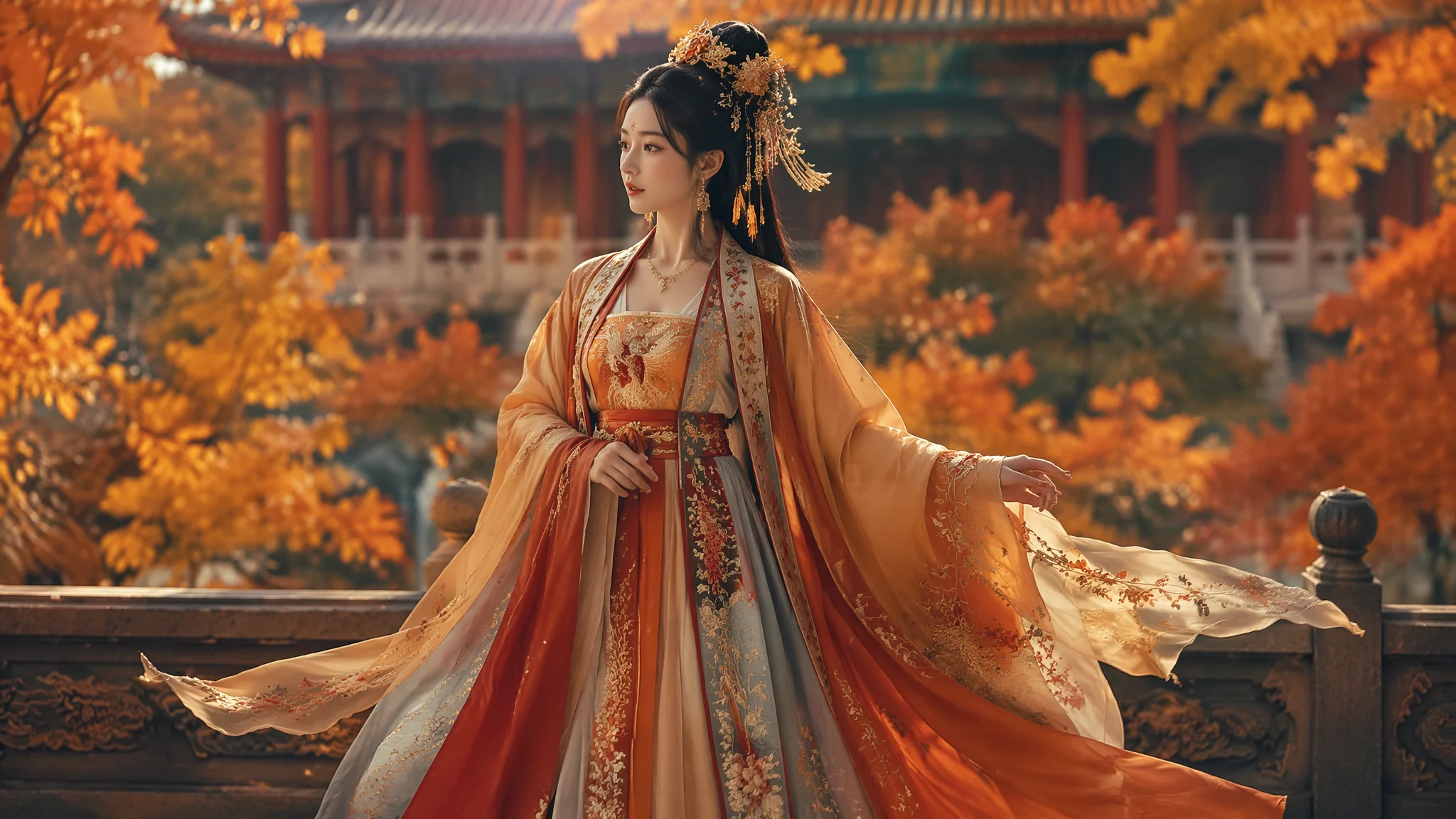
AI画汉服最让同袍血压飙升的事——你写"汉服",AI给你画了一件和服。不是AI故意气你——是训练数据里"East Asian traditional clothing"这个标签下,日本和服、韩国韩服的图像占比远高于中国汉服。一份对主流AI模型训练数据的抽样分析显示,"hanfu"标签的样本量仅为"kimono"的约17%。更扎心的是——即使AI画出了汉服,形制也经常是"关公战秦琼":唐代的上衣+宋代的裙子+明代的头饰+乱七八糟的臆造元素。这篇以中国服装史为纲,把秦汉到明的历代汉服关键词全部整理好——每个朝代都有精确的形制描述+面料描述+纹样描述,让你画出来的汉服经得起同袍的检验。
秦汉曲裾——中国汉服体系的基石。绕襟深衣的层叠结构、交领右衽的方向控制、大带与佩玉的礼制关键词
曲裾深衣是秦汉时期最代表性的服饰——一件衣服通过"绕襟"(衣襟绕身体多层包裹)形成螺旋状的轮廓。AI画曲裾最常见的错误——画成一件直筒袍子。"a quju shenyi robe from the Qin-Han dynasty, the defining feature is the diagonal wrapping of the robe — the front panel wraps from right to left across the body and continues around the back in a continuous spiral, creating multiple overlapping layers that taper from wide at the top to narrow at the hem, the collar crosses diagonally from the right side of the neck to the left armpit forming the distinctive jiaoling youren (cross-collar with the right lapel over the left), the sleeves are wide and bell-shaped, the overall silhouette is elongated and dignified"。
曲裾的核心关键词——"diagonal wrapping creates a continuous spiral"+"multiple overlapping layers tapering from wide to narrow"+"jiaoling youren (right lapel over left)"。"右衽"(右襟压左襟)是华夏服饰几千年的铁律——左衽是给死人穿的。AI不懂这个文化含义,所以必须在Prompt里明确写"right lapel over left, not left over right"。面料关键词——秦汉时期以锦和罗为主:"the fabric is heavy silk brocade (jin) with woven geometric patterns in subdued earthy tones — deep cinnabar red, ochre yellow, and dark indigo, the fabric has a substantial weight that creates deep dignified folds rather than fluttery movement"。秦汉面料的关键——"substantial weight"+"deep dignified folds"+"earthy tones"。不是轻飘飘的仙女风——是厚重的礼制感。
配饰关键词——"a wide silk sash (da dai) tied at the waist with the ends hanging down to the knee, jade pendants suspended from the sash — a jade ring (huan) and a jade arc (huang) clinking softly with movement, the jade pieces are carved with simple archaic patterns like the grain pattern (guwen)"。大带(宽腰带)+组玉佩(一组玉饰挂在腰带上)——这套配饰体系是秦汉贵族服饰的身份标识。画上了,角色就从"普通人"升级为"有身份的汉代贵族"。秦汉服饰的更多考古学参考见中国日报汉服专题的文物复原报道。
唐代齐胸襦裙——中国服饰史上最开放的时期。高腰襦裙的披帛动态、大袖与窄袖的场合区分、花钿与面靥的妆容搭配
唐代齐胸襦裙(裙腰系在胸线以上)是整个中国服装史上最"国际化"的形制。"a Tang dynasty qixiong ruqun with the skirt tied high above the bust line just below the armpits, the upper garment (ru) is a short tight-fitting jacket with narrow sleeves that end at the wrist, a long flowing silk scarf (pibo) approximately 2 meters long is draped over both shoulders and trails behind in the breeze, the skirt is voluminous with numerous fine pleats and falls all the way to the floor creating a bell-like silhouette, the hem drags slightly on the ground in the Tang style"。齐胸的核心关键词——"skirt tied high above bust line"+"short tight upper ru with narrow sleeves"+"voluminous pleated skirt like a bell"+"pibo trailing behind"。四组关键词锁定了齐胸襦裙的独特廓形。
大袖衫——盛唐贵妇的标志性外套:"a wide-sleeved outer robe (da xiu shan) worn open over the qixiong ruqun, the sleeves are extremely wide — nearly touching the ground when the arms are lowered, the robe is made of lightweight gauze (sha) that is semi-transparent, revealing the colors of the inner garments beneath, the gauze has subtle woven floral patterns that catch the light, the overall effect is ethereal and luxurious"。大袖衫的关键——"extremely wide sleeves nearly touching ground"+"semi-transparent gauze revealing inner garments"。窄袖vs大袖的场合区分——窄袖=日常活动(骑马/出行/劳动)、大袖=礼仪场合(宴会/典礼/贵族生活)。写对了袖型就写对了场合。
唐代妆容——面部的时代印记:"Tang dynasty makeup with a white lead-powdered face, the forehead decorated with a vermillion flower-shaped huadian (forehead ornament) painted between the eyebrows, two small dark dimple-like marks (mianye) on each cheek near the lips, the lips are painted in a small cherry shape — only the center portion of the lips is colored red, the eyebrows are thick and shaped like the wings of a butterfly (emei)"。唐代妆容的辨识度极高——花钿(额头贴花)+ 面靥(酒窝处的黑点)+ 点唇(只涂嘴唇中央)+ 蛾眉(粗而短的翅膀形眉毛)。这四个元素画对了,一看就是"唐"。唐代服饰和妆容的完整搭配见AI绘画古风头像的妆容篇和AI绘画古风鸟的唐风配色。
宋制褙子与明制袄裙——中国服饰从"开放"走向"内敛"的审美转折。两宋的纤细修长与明代的端庄敦厚
宋代褙子——中国服饰史上最"瘦"的形制。"a Song dynasty beizi — a long straight-front open jacket with parallel lapels that fall straight down without closing, the silhouette is narrow and elongated, the beizi is worn over a simple cross-collar undergarment and a slim skirt, the sleeves are narrow and straight, the overall length reaches below the knee to the calf, the fabric is lightweight gauze or thin silk in muted elegant colors — celadon green, moon white, soft grey-blue"。褙子的关键词——"parallel lapels that fall straight down without closing"+"narrow and elongated silhouette"+"muted elegant colors"。宋代审美是"窄、长、淡"——和唐代的"宽、短、艳"形成两极对比。
宋代面料——罗是宋代的标志性织物:"the fabric is luo (sheer silk gauze) with a subtle texture of tiny twisted threads creating a faintly shimmering surface, the luo is semi-transparent allowing the colors of the inner garments to show through like a soft haze, the overall effect is refined and understated — luxury expressed through texture and craftsmanship rather than bright colors and bold patterns"。罗的关键——"luxury expressed through texture not color"+"semi-transparent like a soft haze"。宋代有钱人不穿大红大绿——穿的是"看起来素但摸起来贵死"的暗纹罗。
明代袄裙——中国汉服体系最后的成熟形态。"a Ming dynasty aoqun consisting of a waist-length jacket (ao) worn over a pleated skirt (qun), the ao has a standing collar (shuling) and wide sleeves that taper at the wrist, the front closes with distinctive metal buttons (zikou) — a Ming dynasty innovation, the skirt is a mamianqun (horse-face skirt) with flat front and back panels and pleated sides, the fabric is richly woven zhuanghua silk with gold-wrapped threads creating raised patterns of auspicious symbols"。明代的核心——"standing collar (shuling)"+"metal buttons (zikou)"+"mamianqun (horse-face skirt)"。立领和金属纽扣是明代汉服从前面所有朝代中脱颖而出的两大标志性特征。马面裙——"flat front and back panels with pleated sides"——这个结构是明代女裙独有的。
明代的纹样关键词——"auspicious symbols woven in gold thread: the front of the ao features a prominent circular medallion (buzi) containing a detailed design of cranes among clouds symbolizing longevity and nobility, the mamianqun has a wide ornate horizontal band (lan) at the knee level embroidered with peonies, bats, and ruyi motifs"。补子(胸前圆形的身份徽章)+ 裙襕(裙子膝盖位置的横条绣花带)=明制汉服的视觉签名。更多明代纹样见大都会博物馆中国纺织品的明代服饰收藏。
传统纹样是汉服的"文化密码"——云纹、缠枝、龙凤、梅兰竹菊的关键词写法。纹样的位置、大小、颜色与服装形制的适配
云纹——从秦汉到明清贯通始终的纹样。"traditional Chinese cloud motifs (yunwen) in stylized curling spirals, the clouds are not realistic but abstract — simplified into flowing ribbon-like forms with curling heads like auspicious lingzhi mushrooms, the pattern is arranged in an all-over repeat but is denser at the shoulders and hem and sparser in the middle, the clouds are woven in gold thread on a dark indigo ground"。云纹的关键——"stylized curling spirals like lingzhi mushrooms"+"denser at edges, sparser in middle"。缠枝纹——从唐代开始流行的植物纹。"continuous scrolling vine pattern (chanzhiwen) with peony blossoms at each curl, the vines are elegant S-curves that weave an undulating rhythm across the fabric, each peony is layered with 5-7 petals suggesting depth, the pattern is woven in a subtle tone-on-tone technique — the same color as the ground fabric but with a slight sheen that reveals the pattern when the light hits"。缠枝纹的关键——"tone-on-tone technique"——同色暗纹,光线扫过时才能看到图案。这是中国传统面料最高级的装饰手法。
龙凤纹——皇家专属但AI不知道禁忌。"a pattern of dragons (long) and phoenixes (fenghuang) woven into the fabric, the dragon has five claws (only for imperial use — historically significant detail), the phoenix's tail feathers spread in a magnificent fan, they chase a flaming pearl among stylized clouds and waves (lishui) at the hem, the pattern is woven in gold and silver thread against a rich red ground"。龙凤纹的关键——"five claws — imperial use"+"flaming pearl"+"waves at hem (lishui)"。写龙凤纹时加一句"historically significant detail"——这句话暗示AI这是一个需要特别注意的文化细节。梅兰竹菊——四君子,文人精神的象征。"the four gentlemen of Chinese art — plum blossoms (mei), orchids (lan), bamboo (zhu), and chrysanthemums (ju) — arranged as individual sprigs scattered sparsely across the fabric, each plant is rendered in the style of ink wash painting with graceful calligraphic strokes, the pattern embodies the literati spirit of refined simplicity"。四君子关键——"sparse scattered sprigs"+"ink wash painting style"。四君子的美不在于"多"——在于"少就是多"。
纹样与形制的搭配规则——秦汉=几何云雷纹、唐=团窠联珠纹(波斯影响)、宋=折枝花鸟纹(写生风格)、明=吉祥寓意图案(谐音梗——蝠=福、鱼=余、瓶=平)。纹样不是随便贴的——是时代的视觉签名。更多纹样文化解读见AI绘画古风场景的传统元素解析。
AI总是把汉服画错——右衽画成左衽怎么办?
右衽(右襟压左襟,y形领口从右肩斜向左腋)是华夏服饰区别于蛮夷服饰的核心标志。修复——①正面词:"jiaoling youren cross-collar with the right lapel wrapping over the left, the collar line crosses from the right side of the neck diagonally down to the left armpit";②负面词:"--no left lapel over right, no left ren";③如果用在Midjourney里,可以在"—no"参数里写"left lapel over right"。右衽是汉服的第一技术红线——错这个,同袍一眼就能看出来。
不同朝代的汉服可以混搭吗?比如唐制上衣配宋制裙子?
历史上不混搭。但AI创作里可以做"朝代融合风格"——前提是你要在Prompt里明确标注:"a creative fusion design inspired by Tang dynasty silhouette with Song dynasty color palette and Ming dynasty textile patterns — a deliberate artistic choice, not a historical recreation"。写清楚这是"deliberate artistic choice, not historical recreation"——这样观众就不会以为你搞错了朝代。混搭是创意,混淆是无知——关键词里的这句声明就是区别。
男装汉服和女装汉服的关键词有什么核心区别?
男装——廓形直、腰线低、肩宽、袖口收、颜色沉稳(玄色/青色/赭色)。"male hanfu with a straight rectangular silhouette, the waistline is positioned at the natural waist or slightly lower, the shoulders are structured, the collar is a cross-collar or round collar (yuanlingpao), the color is somber and dignified"。女装——廓形收腰或高腰、肩窄、袖可大可小、颜色可鲜艳。"female hanfu with a cinched waist or high waistline, the silhouette is more fluid, the shoulders are softer, the color can range from subtle pastels to vibrant reds and golds"。性别差异归根结底是"比例"的差异——不是颜色的差异。
AI能画出具体的传统工艺吗?比如刺绣/织金/妆花/缂丝?
能,但要翻译成视觉特征而非工艺名称。刺绣(embroidery)="raised slightly from the fabric surface, the threads have a subtle sheen different from the ground fabric"。织金(gold weaving)="gold threads woven directly into the fabric creating patterns that are integral to the textile, not applied on top"。妆花(zhuanghua)="polychrome silk threads woven into a pattern with a slightly raised texture, the motifs have distinct color blocks separated by thin outlines of gold"。缂丝(kesi)="the pattern has a carved appearance with tiny gaps between color areas where the weft threads don't interlock, the technique creates a subtle texture like fine mosaic"。工艺的视觉密码在"阴影/凸起/光泽差异/色块间隙"——把这些写出来,AI就能画出接近的质感。
有没有"现代汉服"风格?就是改良日常能穿出门的那种?
有——"modernized hanfu for daily wear (xin hanfu), the traditional silhouette is preserved but the fabric is contemporary — perhaps a qixiong skirt in comfortable cotton-linen blend instead of heavy silk, the length is shortened to ankle-length for practicality, the sleeves are modified to 3/4 length for convenience, the overall aesthetic bridges traditional elegance and modern practicality, suitable for wearing on a casual day out"。新汉服的关键——"bridges traditional elegance and modern practicality"。"可以日常穿出门的汉服"——保留了廓形但改了面料和长度。这个风格在年轻群体里越来越受欢迎。
转发给也在研究汉服AI绘画的同袍——一起用AI复兴华夏衣冠。