头像AI绘画古风怎么选?汉服头饰与古风氛围的关键词指南
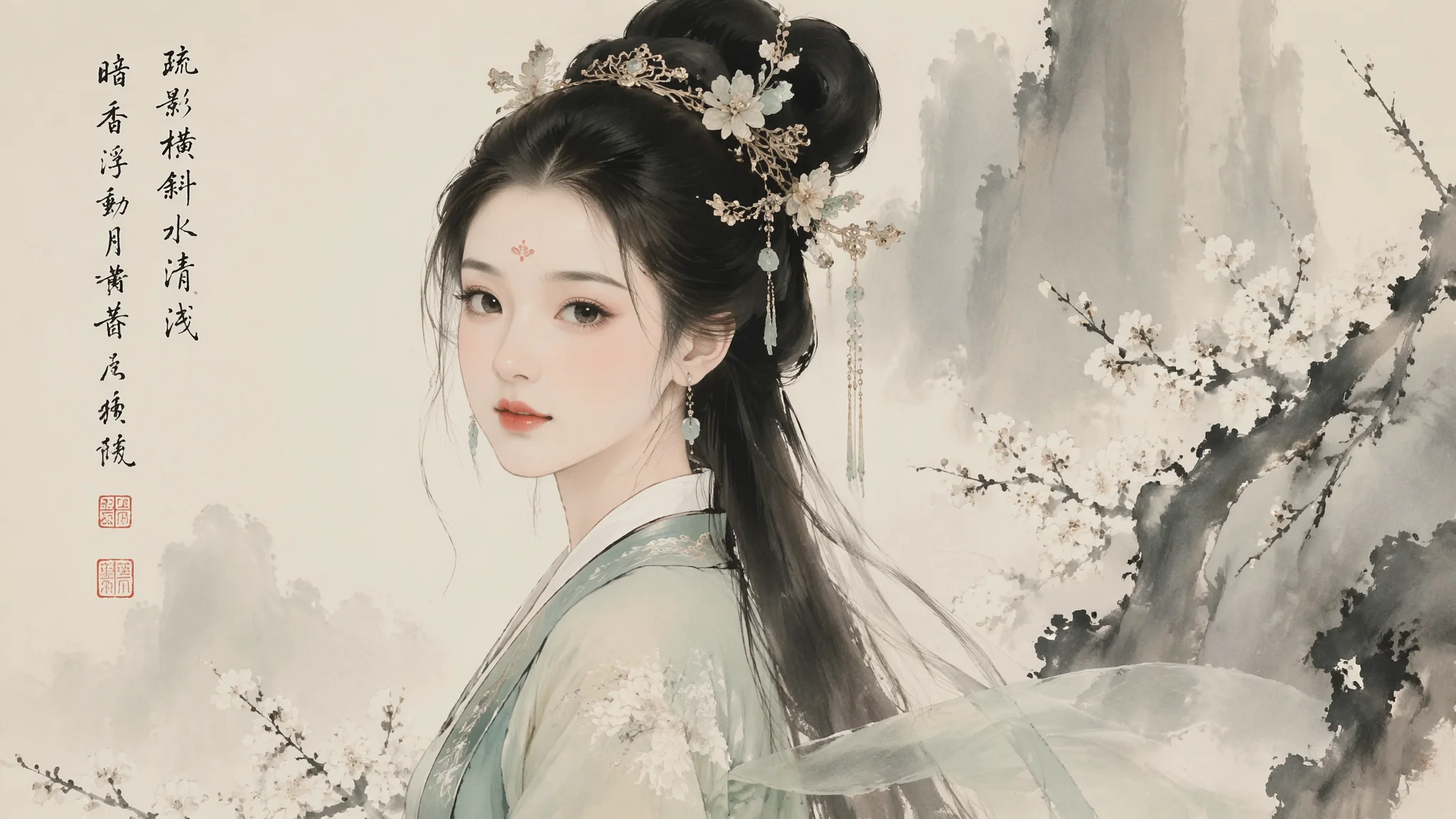
古风头像用AI画出来看着像影楼写真而不是工笔画?这个问题我总结了三个根源:服装形制写错——明明是唐代却穿了宋制的褙子、头饰关键词太笼统——"hair ornament"画出来是一坨金属、背景氛围没写朝代坐标——结果AI给你混了个和风樱花配中式亭子。古风头像的门槛不在技术,在"对不对味儿"。一份对2000+张AI古风头像的分析显示,标注了具体朝代和形制关键词的作品,用户好评率比笼统描述的高出2.8倍。这篇把汉服形制、头饰分类、氛围营造三大板块的关键词全部掰开揉碎讲清楚。
汉服形制是古风头像的骨架——形制写错了,后面的头饰和氛围全白搭。曲裾、齐胸襦裙、褙子、圆领袍的关键词该怎么写
AI不认识汉服。它只认识"traditional Chinese clothing"这个模糊的概念——对应的视觉素材包罗万象,从清朝旗装到日本和服全部搅在一起。你不写形制,AI就随机抽。
曲裾(秦汉深衣)——关键词重点在"绕襟":"wearing a quju-style shenyi robe from the Han dynasty, the robe wraps diagonally across the body with multiple overlapping layers creating a spiral silhouette, the fabric is heavy silk brocade with subtle cloud patterns woven in, wide sleeves that taper at the wrist, a silk sash tied at the waist with jade pendants hanging from it"。关键词"wraps diagonally"和"spiral silhouette"是曲裾区别于其他形制的视觉锚点——别写成"straight robe",那就不是曲裾了。齐胸襦裙(唐代)——关键词重点在"高腰"和"披帛":"a qixiong ruqun from the Tang dynasty with the skirt tied high above the bust, the upper ru is a short tight-fitting jacket with narrow sleeves, a long flowing pibo silk scarf draped over both arms and trailing behind, the skirt is voluminous with numerous pleats"。齐胸的核心是"high above the bust"——这个词决定了裙子的高腰位置。
褙子(宋代)——关键词重点在"直领对襟"和"瘦长":"wearing a beizi from the Song dynasty, a long straight-front open jacket with parallel lapels, narrow and elongated silhouette, the fabric is light gauze with delicate embroidered plum blossom branches along the hem, worn over a simple cross-collar undergarment"。宋制褙子最容易被画成"开衫外套"——加上"parallel lapels"和"elongated silhouette"才能把形状锁死。圆领袍(唐代/明代)——关键词重点在"圆领"和"革带":"a yuanlingpao round-collar robe from the Tang dynasty, the circular neckline trimmed with gold brocade, a leather belt with jade plaques cinched at the waist, the robe falls straight to the ankles, wide sleeves with tight cuffs, the overall silhouette is dignified and upright"。圆领袍最容易翻车的是领口——AI经常画成V领或方领,必须用"circular neckline"明确限定。
四种形制别混着写。我见过最离谱的翻车:一个人写了"Tang dynasty beizi with qixiong skirt"——AI画出来的东西像被揉成一团的四种衣服拼贴画。掌握形制基础后再看AI绘画汉服古风里的历代服饰演进,能帮你建立更完整的形制认知框架。
头饰写好了能让古风头像瞬间"对味儿"。发簪、步摇、花钿、凤冠四大类头饰的关键词拆解与质感控制
发簪——最基本也最容易写成"a stick in the hair"。正确的写法是把材质、工艺、造型三层叠上去:"a hairpin crafted from warm-toned rosewood, the head of the pin carved into a delicate plum blossom with a single pearl set in the center, the wood grain faintly visible on the shaft"。材质+工艺+造型——这是所有头饰关键词的通用公式。步摇——核心是"动感":"a buyao hair ornament with dangling gold chains that sway gently with every slight movement, each chain ending in a tiny bell or teardrop-shaped gemstone, the main piece is an intricate phoenix design in filigree gold"。关键词"sway gently with every slight movement"让AI画出的是"会动的步摇"而非"钉在头发上的静态金属"。不写"sway",步摇就变成发簪。
花钿——核心是"贴"不是"戴":"a delicate huadian floral ornament painted directly on the forehead between the eyebrows, the design is a five-petaled plum blossom in vermillion red, each petal perfectly symmetrical, the edges slightly blurred as if painted on skin not stuck on"。关键词"painted directly on the forehead"和"edges slightly blurred"是区分花钿和贴纸的关键。凤冠——最容易画成"顶了个金属鸟笼"。正确写法是把冠体、装饰、佩戴方式写清楚:"a fengguan phoenix crown worn at the very top of the head, the crown base is a delicate wire framework shaped like auspicious clouds, golden phoenixes with outstretched wings perch at the front and sides, each phoenix holding a string of pearls in its beak that drape down over the wearer's hair, kingfisher-feather inlay creates an iridescent blue-green sheen on the crown surface"。凤冠不是一个整块金属——是框架+凤凰+珠串的复合结构,你得把这个结构拆给AI看。
头饰的质感关键词尤其重要。金属要写"filigree gold"而非"gold"(前者是掐丝金工艺、后者是金块),玉石要写"translucent white jade with subtle green undertones"而非"jade"(加了透明度描述才像玉)。头饰质感写得不到位的古风头像,看起来像义乌小商品批发市场出来的道具——亮晶晶但毫无重量感。更多头饰搭配技巧见AI绘画古风少女的完整饰品搭配指南。
古风氛围不是加个"ancient"就能出来的。光影色温、背景元素与朝代坐标的三层叠加法
古风头像的氛围感取决于三个变量的配合:光线的朝代属性、背景的意象密度、色彩的时代色板。
光线的朝代属性是一个被严重低估的维度。汉代光:"warm amber light like late afternoon sun filtering through paper windows, the lighting is diffused and gentle, casting long soft shadows, the overall tonality is earthy and grounded"。唐代光:"brilliant golden light as if the subject is standing in a grand palace hall illuminated by hundreds of oil lamps, warm and opulent, the gold light catches every metallic surface and makes silk shimmer"。宋代光:"soft grey-blue light like a misty morning by a mountain stream, the lighting is refined and restrained, subtle gradations rather than dramatic contrasts, the mood is contemplative and elegant"。三种光画出来的古风完全不是一个朝代的气质。
背景的意象密度也要控制。汉风背景:"a distant silhouette of a stone watchtower on a windswept plain, sparse and monumental, a single gnarled pine tree framing one side, the sky is vast and slightly hazy"。唐风背景:"lush peony garden in full bloom with layered terraces of flowers, a corner of an ornate pavilion with upturned eaves visible behind, butterflies and drifting petals fill the air, rich and abundant"。宋风背景:"sparse plum blossom branches extending from one corner, an ink-wash mountain landscape faintly visible through a round moon gate, a small porcelain cup of tea on a nearby wooden stand, quiet and composed"。意象密度:汉=稀、唐=密、宋=精——这是大方向。
色彩的时代色板可以记一个简单规则:汉=赭石暖黄系、唐=朱砂金碧系、宋=青灰淡雅系。把色板关键词写进提示词里——"Tang dynasty color palette of vermillion, gold, and emerald green"——AI的色彩输出会稳定很多。色彩理论和古风配色方案参考Color Matters设计色彩。
头像的构图和脸型控制比全身像更苛刻——因为每一像素都怼在脸上。特写构图、脸型风格与表情微调的关键词技巧
头像构图第一个要定的是景别。肩膀以上:"bust portrait, framing from the collarbone upward, the face occupies approximately 60% of the image, sharp focus on the eyes with the background softly blurred"。脸部特写:"extreme close-up portrait, the face fills 80% of the frame, one eye slightly more illuminated than the other creating depth, the skin texture is visible with a natural glow, a few loose strands of hair frame the face"。景别写清楚了AI才不会给你出半身像或全身像。
脸型是古风头像的灵魂。鹅蛋脸:"oval face with a softly tapered chin, the jawline is smooth and refined without any sharp angles, the cheeks have a subtle fullness typical of Tang dynasty beauty standards"。瓜子脸:"heart-shaped face with a pointed chin and wider forehead, the cheekbones are high but not prominent, the overall impression is delicate and ethereal like a Song dynasty painting"。脸型不能只写"beautiful face"——太笼统了,AI随机抽的脸型大概率不是你想要的。
表情微调是古风头像最难的部分。古风表情和内敛——"a subtle Mona Lisa-like smile, the lips slightly curved but not showing teeth, the eyes are gentle and slightly downcast as if lost in a poetic thought, a quiet dignity in the expression, not blank but deeply peaceful"。关键是"not blank but deeply peaceful"——AI很容易把"平静"误解成"面瘫"。加一句"like still water that runs deep"能有效传递"静水流深"的意境。头像构图的更多精细控制方法见AI绘画古风头像和AI绘画古风美男。
为什么我写的古风头像总带有和风元素?
因为AI的训练数据中"East Asian traditional"类别里日本图像占比远高于中国古风。解决方法是加负面提示词:"--no kimono, no Japanese architecture, no cherry blossoms in Japanese style, no torii gate, no geta sandals"。正面也要写"specifically Chinese Han dynasty/tang dynasty style, not Japanese"。双重限定才能把坐标定在中国。
头饰写了很多但还是被画成模糊的一坨怎么办?
这是细节密度不够。一个头饰至少需要材质+工艺+造型三层描述。对比一下:"gold hairpin"→"a hairpin of warm yellow gold, the surface hammered with tiny floral patterns visible under close inspection, the pin head shaped like a lotus bud just beginning to open"。后者的信息密度是前者的五倍以上。
古风头像画出来脸总是太现代怎么办?
加"classical Chinese painting aesthetics"和"not modern makeup, no eyeliner, no mascara, no lip gloss"。"not modern makeup"这条负面提示词比任何正面描述都能更快地把脸从"2020年代网红脸"扳回"古典仕女脸"。发型也要跟上——"traditional Chinese updo with hair ornaments, not loose modern hairstyle"。
不同朝代的唇妆有区别吗?AI能识别吗?
有区别,但AI无法精确识别具体朝代唇妆。可以用概括性关键词引导:"Tang dynasty beauty mark and small red lip, the lips painted only in the center creating a petite mouth effect"。唐代"点唇"只涂嘴唇中央一小块的视觉效果,用"painted only in the center"就能大致描述。更多妆容细节参考AI绘画美女词汇大全。
古风头像能不能做侧脸?效果好吗?
侧脸能做而且效果常常比正面好——因为侧脸自带叙事感和留白意境。关键词:"profile view from the side, the line of the nose and chin forming an elegant silhouette against a misty background, one elaborate hairpin visible in sharp detail, the ear visible with a delicate jade earring"。侧脸+雾气背景是古风头像的王炸组合。
觉得写得还行就转给也在折腾古风头像的搭子。