AI熊猫壁纸绘画进阶:国宝大熊猫的可爱治愈手机桌面视觉创作
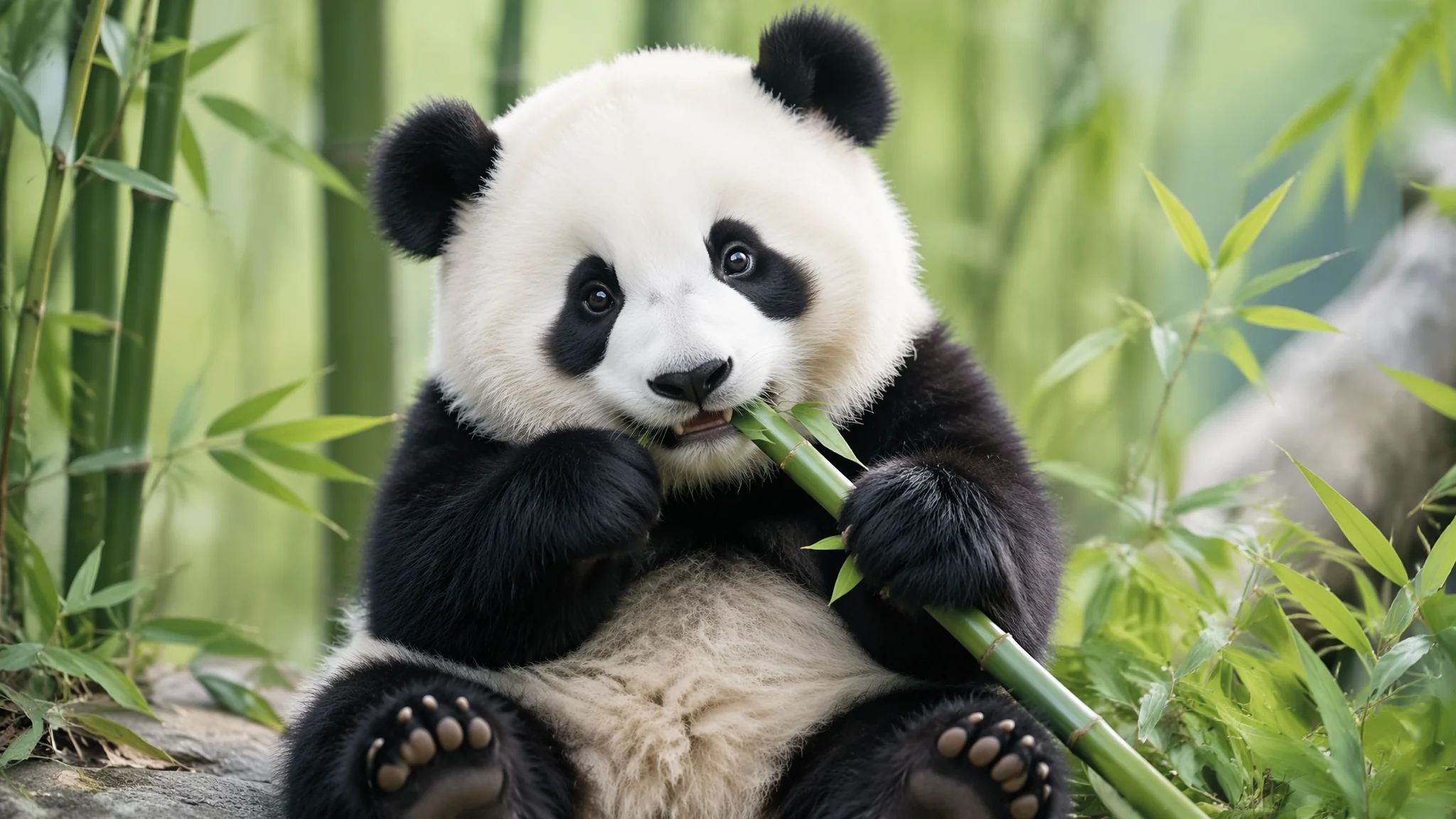
去年我去成都大熊猫繁育基地——早上六点排队,七点入园,就为了抢在旅游团前面去看刚出生三个月的熊猫幼崽。那个育婴室里趴着七八只小熊猫,全部四仰八叉地睡在保温箱里——毛茸茸的像个会呼吸的芝麻汤圆。我趴着看了四十分钟没挪地方,旁边的保安大叔都看笑了。回来之后想用AI画一张熊猫壁纸当手机桌面——然后被AI气笑了。AI画的熊猫普遍有三个问题:黑白分界线像用PS套索工具抠的——毛发过渡完全不存在;眼睛那块黑斑画得要么太大像戴了墨镜要么太小像没睡醒;最要命的是熊猫幼崽——AI完全画不出"奶萌",画出来的是"缩小版成年熊猫"——比例完全不对。后来我研究了大量熊猫纪录片和动物园实拍照片,总结出了几个关键数据:幼崽头身比接近1:1.5(成年熊猫是1:4)、黑白毛的过渡带大约2厘米宽(不是一条线)、熊猫"可爱"的核心在于"圆"——圆脸圆耳朵圆肚子圆屁股——所有轮廓都是弧线没有尖角。这篇进阶版在前一篇熊猫教程的基础上,把毛发过渡、幼崽比例、竖屏壁纸构图这三个之前没展开的难题深入拆开。
熊猫毛色的"灰度过渡带"——黑白之间不是刀切线,是毛发密度的渐变
熊猫的黑白配色在AI的默认世界里是"纯黑#000+纯白#FFF+锐利边界"——这是卡通和Logo给AI种下的错误认知。真实的熊猫毛色有三个层次:纯黑区域(耳朵、眼眶周围、前肢上半部)、纯白区域(脸颊、腹部、背部)、以及两者之间的"灰白过渡带"——这个过渡带是熊猫看起来"真实"而不是"画出来的"的关键。
毛色过渡Prompt:"the panda's iconic black and white coloration has natural soft transitions——the border between black and white fur is not a sharp line but a gradient zone about 2 centimeters wide, in this transition zone individual black hairs are scattered among the white fur——like grains of black pepper on a white plate, the density of black hairs increases as you move toward the fully black area and decreases as you move toward the white area, this creates a natural 'feathered' edge that is visible in close-up, the fur direction plays a role in the transition——on the shoulder the black fur grows downward while the white chest fur grows slightly outward, the different growth directions prevent the colors from forming a hard seam"。眼部黑斑的边缘描述:"the dark eye patches are the panda's most distinctive feature——they are not perfect circles but irregular ovals that slope slightly downward toward the nose, the inner edge (closest to the nose) is slightly more blurred than the outer edge, the black fur of the eye patch extends a few millimeters beyond the eye itself creating the panda's characteristic 'sleepy' look"。在AI帅气黑猫绘画中讨论黑猫的纯黑毛色光泽时也有类似的毛发描述逻辑——不过黑猫是"全黑找层次",熊猫是"黑白找过渡"。
熊猫幼崽的"奶萌比例"——头身比和毛质是区分幼崽和成年熊猫的核心
AI画熊猫幼崽翻车的核心原因是训练数据里"熊猫幼崽"的真实照片比例远少于"成年熊猫"——AI只能把"panda cub"理解为"小一号的成年熊猫"。但真正的熊猫幼崽和成年熊猫在比例上是两个不同的物种:幼崽头占身体快一半、四肢短得像小肉球、毛是蓬松的绒毛而不是粗硬的针毛。
幼崽比例Prompt:"a baby giant panda cub approximately 3 months old——its proportions are completely different from an adult panda, the head is enormous relative to the body occupying nearly 40% of the total body mass, the body is a rounded fuzzy oval about 1.3 times the size of the head——the neck is completely invisible making the cub look like a fluffy snowman with ears, the limbs are comically short and thick——the front paws are round pads that barely extend beyond the cub's chin when it sits, the back legs are even shorter and splay outward when the cub sits creating a tripod-like base"。毛质区别:"the cub's fur is not adult panda fur——it is baby fuzz, a downy soft fluff that has no defined direction and stands up in all directions like a dandelion puff, the fur reflects light as a soft halo rather than a directional sheen, the cub looks like it would feel like a warm cloud if you touched it"。参考成都大熊猫基地的熊猫成长记录——从出生到三个月之间的比例变化之快令人惊讶,每个阶段的"萌点"都不同。
竹子与自然光——熊猫壁纸的场景氛围设计
熊猫壁纸的场景不能太复杂——因为熊猫本身的黑白强对比已经占据了画面的视觉重心。背景应该"退后一步":用低饱和度的绿色竹子+柔和的天光+浅景深虚化来营造一种"安静治愈"的氛围。
治愈系竹林场景Prompt:"the panda sits peacefully in a bamboo grove on a misty morning——the bamboo stalks around it are a soft muted green, the color of matcha tea diluted with milk, the mist diffuses the morning sunlight into a gentle ambient glow that illuminates the panda's white fur with a subtle warm halo, the bamboo leaves in the background are completely out of focus——they dissolve into soft green bokeh shapes that frame the panda without competing for attention, a few bamboo leaves in the foreground are also blurred but closer to the lens——they create a subtle framing vignette, the ground beneath the panda is covered with fallen bamboo leaves in shades of pale yellow-green and brown, the overall color palette is intentionally limited——white, black, warm grey, and three shades of soft green, no other colors distract from this peaceful triad"。在AI场景生成绘画中讨论了场景的"复杂度管理"——熊猫壁纸是"极简场景"的典型案例:主体视觉权重太高时,场景必须减负。
熊猫壁纸的竖屏构图——9:16比例下熊猫的最佳位置和周围留白
手机壁纸的构图需要考虑一个额外的元素:锁屏上的时间和APP图标。熊猫不能放在时间显示的区域(通常是屏幕上部三分之一)、也不能放在底部图标密集区。最佳位置是屏幕中间偏上——熊猫的脸在"时间"和"第一排图标"之间的空档里。
竖屏构图Prompt:"a 9:16 vertical phone wallpaper featuring a seated panda——the panda occupies the middle third of the frame, its face is positioned slightly above center where it will sit comfortably between the lock screen clock and the first row of app icons, the panda is large in the frame——its body fills approximately 60% of the image width, the top quarter of the image (where the clock sits) is a soft gradient of misty sky——no important visual elements in this zone, the bottom quarter (where app icons dock) is softly blurred fallen bamboo leaves——dark enough to provide contrast for app labels but not so detailed that it competes with the icons, the space to the left and right of the panda is generous negative space filled with soft out-of-focus bamboo——this gives the wallpaper breathing room and prevents the panda from feeling cramped in the narrow phone screen"。更多竖屏壁纸的构图技巧在AI机械壁纸绘画中也有详细展开。
常见问题
AI画的熊猫经常"眼神不对"——怎么让熊猫的眼睛有神而不空洞?
熊猫的眼睛藏在黑色眼斑里——AI经常把眼睛画成"两个小黑点"或者完全省略。有神的熊猫眼睛Prompt:"the panda's eyes are visible within its dark eye patches——the eyes are warm dark brown not black, they have a visible catchlight——a tiny white reflection dot that gives the eyes life and personality, the catchlight is not a perfect circle but a small irregular highlight that suggests moisture on the eye surface, the eyes have a gentle gentle expression——the panda looks content and slightly curious, not aggressive or frightened"。眼神的核心是"catchlight"(眼神光)——没有它的眼睛就是两颗死黑的珠子。
怎么让熊猫壁纸有"季节感"——春天有花、秋天有红叶?
季节感通过背景植物传达——熊猫本身不变,变的只是环境。春天版:"the bamboo grove has fresh spring shoots emerging from the ground——bright pale green new growth, a few pink cherry blossom petals have drifted into the scene carried by a gentle breeze"。秋天版:"the bamboo leaves have begun to turn at their edges——a subtle golden-brown trim on each leaf, a few red maple leaves have fallen among the bamboo creating small splashes of crimson"。冬天版:"a light dusting of snow covers the bamboo leaves and the panda's head——the panda looks slightly bewildered by the snowflake on its nose, the air has the crisp clarity of a winter morning"。
画吃竹子的熊猫需要注意什么——竹子和爪子的互动怎么画自然?
熊猫吃竹子的画面需要描述"伪拇指"(熊猫用来握竹子的腕骨延伸结构):"the panda holds a bamboo stalk with its front paw using its pseudo-thumb——a specialized wrist bone that acts like a sixth digit, the pseudo-thumb wraps around the bamboo while the five true fingers curl on the other side creating a surprisingly dexterous grip, the panda is chewing on the bamboo with its powerful jaws——a few bamboo fibers dangle from the corner of its mouth, the bamboo stalk has been partially stripped of its outer green layer revealing the pale fibrous interior"。