AI桃花仙女绘画:桃花树下的唯美古风女性角色视觉设计创作
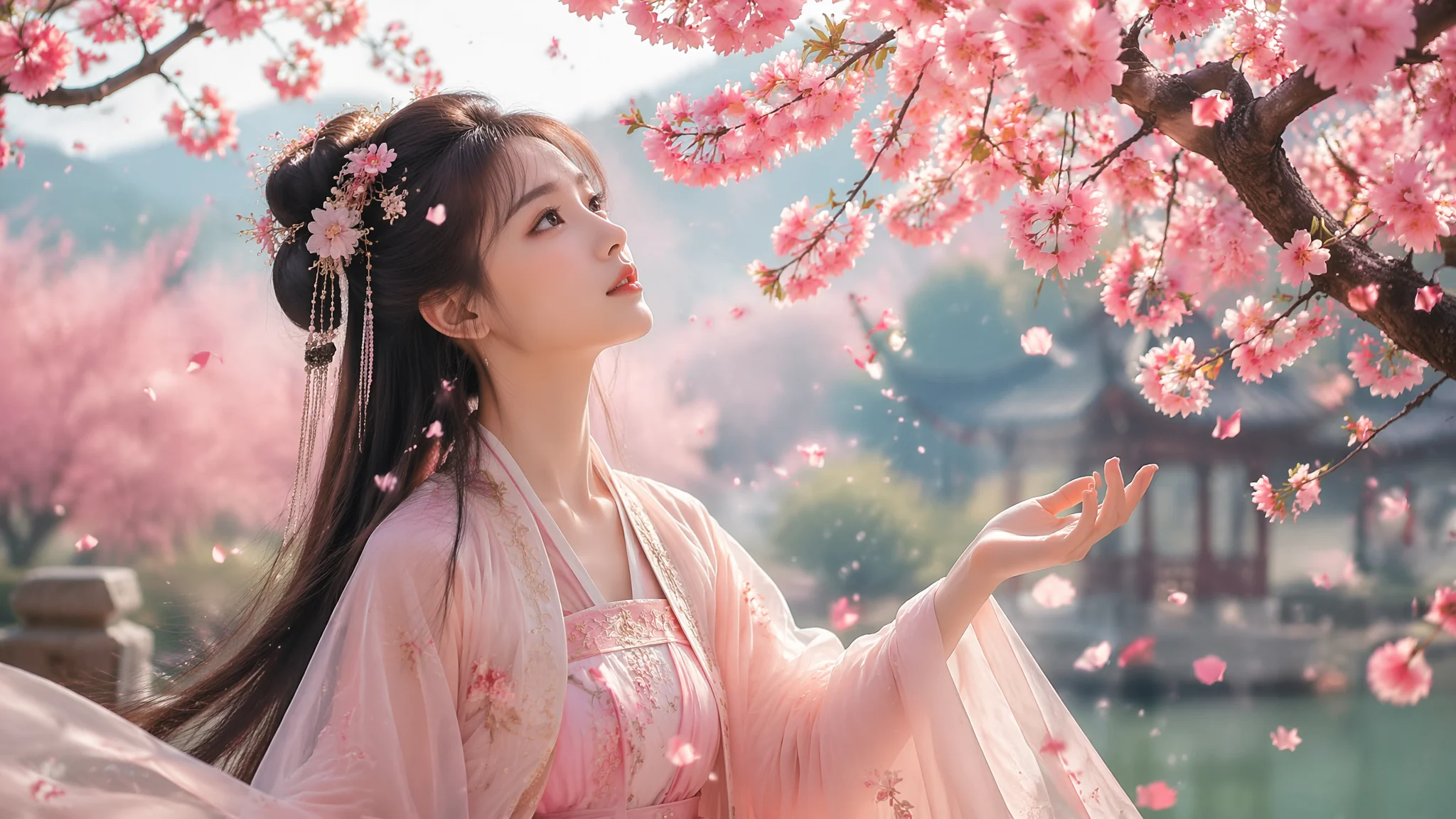
去年春天去了一趟杭州西湖——不是去看湖,是去看桃花。三月底的白堤边上桃花开得正盛,树下全是穿汉服拍照的女生。我蹲在旁边看了半个多小时,发现一个问题:真人拍出来的桃花汉服照,桃花树太高、光线太硬、背景全是游客——怎么拍都不够"仙"。回来之后我用AI试着重现那个场景——一个穿淡粉色齐胸襦裙的女生站在桃花树下、花瓣从枝头飘落、阳光透过花瓣洒在她肩上。第一版翻车了——桃花树像一坨粉色的棉花糖。调整了七八版之后终于找到了"仙气桃花女"的Prompt密码。
桃花树的正确打开方式——从"粉色色块"到"有枝有花有层次"
AI画桃花树最容易翻的两个点:一是整个树冠变成一块均匀的粉色——没有枝干的穿插、没有花簇的疏密变化;二是花朵的形态完全丢失——远看是桃花,近看是一堆模糊的粉白色圆点。要解决这个问题,你需要把"一棵桃花树"在Prompt里拆成三个层次来写。
第一层——枝干结构:"a peach tree with clearly visible branching structure, the main trunk is textured with rough bark, the branches spread outward and slightly upward in a natural asymmetrical pattern, some branches are thick and old while others are thin and young——new growth has a reddish tinge"。枝干是树的骨架——没有骨架的花就是浮在空中的色块。
第二层——花朵密度变化:"the blossoms are clustered more densely on the outer branches and sparser near the trunk, some sections of the tree are heavy with flowers while other sections show more green leaves and bare branches——this uneven distribution looks natural, not like a manicured garden tree"。不均匀是关键——自然界里没有一棵树的每一根枝条上都开着一样多的花。
第三层——花瓣的个体特征:"each blossom is a five-petaled peach flower in soft pink, the petals are slightly translucent——sunlight passing through them creates a glowing effect, the center of each flower has fine stamens in a deeper pink"。强行要求"五瓣"是遏制AI把花变成模糊色块最有效的手段。关于古风自然场景的构图逻辑,AI桃花树场景绘画里有植物元素的系统性拆解。
古风仙女的三层视觉语言——服饰、发髻、妆面
"仙"这个字在视觉上是可以拆解的:服饰提供70%的气质底色,发髻贡献20%的时代特征,妆面给出最后10%的人物辨识度。三层叠加对了,站那里不说话都仙。
服饰层——推荐大袖衫+披帛组合:"a flowing layered hanfu with wide sleeves——the outer layer is a sheer silk gauze in pale pink that catches the breeze, the inner layer is a cream white silk with subtle embroidery, a long flowing sash trails behind her——the fabric moves as if weightless, the overall silhouette is elegant and ethereal"。大袖衫的优势在于"空气感"——袖口宽大、布料轻薄,风一吹袖子鼓起来,画面里的"动态"就有了。披帛(长飘带)是古风仙女图里的点睛道具——一条从肩头垂到地面的丝带被风轻轻吹起,瞬间把"站着不动"变成"飘然欲仙"。
发髻层——半束半散最保险:"her black hair is styled in an elegant half-up traditional Chinese hairstyle, a portion of hair is pinned up in a loose bun adorned with a simple peach blossom hairpin, the rest flows down her back like a waterfall, a few strands of hair are lifted by the gentle breeze"。全束发太正式像宫装——全散发又容易像"刚睡醒"。半束半散的平衡感刚好——既有古风发髻的识别度,又有散发的柔美感。
妆面层——淡雅中一点红:"her makeup is subtle and classical——lightly defined eyebrows like distant mountains, a faint blush on her cheeks that echoes the color of peach blossoms, her lips are tinted in a soft coral pink, the overall look is natural and refined rather than heavy or theatrical"。桃花仙女的妆容核心在"淡"——太浓就变成花旦了,不是仙女。跟AI古风人物绘画里的唐风妆容是两条完全不同的审美路线。
三种"仙气氛围"的光影公式
桃花仙女图的灵魂在光线——同样的构图同样的服饰,光不对就是"桃花树下站了一个人",光对了就是"仙女下凡"。
晨光型——"early morning light filtering through the peach blossoms, soft golden rays creating dappled light patterns on the ground and on the character, the sun is low and the light has a warm honey tone, the atmosphere is fresh and full of promise"。晨光的金粉色和桃花的粉色天然协调——两个暖色系叠加没有色相冲突。
逆光型——"backlit by the afternoon sun, the peach blossoms glow with a translucent pink halo, the character's silhouette is rimmed with a soft golden light——her hair catches the light and looks almost luminous, lens flare adds a dreamy quality, the overall feeling is ethereal and otherworldly"。逆光是制造"仙气"最快的捷径——光线从背后穿透花瓣和发丝,物体的边缘都在发光,视觉上的"超现实感"自然就出来了。
薄雾型——"a light mist hangs in the air among the peach trees, the scene has a soft-focus quality——like looking through a veil, the colors are muted and pastel, the atmosphere is mysterious and poetic, distant blossoms fade into the haze"。雾是空间纵深感的天然滤镜——前景清晰、中景朦胧、远景消失在雾里,三个层次一拉开,画面就"深"了。
三种光线的Prompt骨架可以从DeviantArt的古风数字绘画社区和ArtStation的东方奇幻概念设计中逆向学习——找你喜欢的光影效果图,看创作者的标签和描述,反向拆出Prompt关键词。
花瓣飘落——五条规则让"粒子效果"变成"场景叙事"
很多AI桃花图中花瓣飘落的感觉像"粉色头皮屑"——小、碎、均匀、毫无美感。真正好看的飘落花瓣是有"故事"的——它们在画面中的位置、数量、大小、清晰度都在帮助讲述一个瞬间。
规则一:大小分三级。前景花瓣——大而模糊(镜头焦点之外),两三片就够了。中景花瓣——中等大小、清晰、三五片分散在不同高度。远景花瓣——小、多、像粉色光点融入背景。三级大小一拉开,空间的纵深感就有了。
规则二:有人物互动。至少有一片花瓣落在人物身上——头发上、肩膀上、手心里、裙摆上。这个细节是"场景里的花瓣"和"PS上去的花瓣"的分水岭。
规则三:方向有变化。不是所有花瓣都垂直下落——有的被风卷起往上飘、有的斜着掠过画面、有的旋转着下落。"some petals are drifting upward caught by a gentle updraft, others float horizontally on a breeze, most are descending slowly in a gentle spiral"。
规则四:地面有堆积。树根附近和画面底部有少量堆积的花瓣——"a delicate carpet of fallen petals around the base of the tree"。这个细节把"正在发生的瞬间"锚定在了一个"有过去"的场景里。
规则五:颜色有层次。不是所有花瓣都是同一个粉色——"the petals range from pale blush to deep rose pink, some are fresh and vibrant while others are faded and translucent at the edges"。同一棵树上不同阶段的花颜色不一样——有的刚开、有的快谢了。更多动态氛围营造的技法见AI古风场景绘画里的自然元素控制专题。
常见问题
为什么我画的桃花仙女总是"看起来像影楼写真"而不是"古典仙女"?
影楼写真的视觉特征:正面平光、影楼背景布、现代妆容、摆拍姿势。如果Prompt里没有刻意排除这些元素,AI默认参考的就是现代摄影。解决方法:在负面Prompt里加"modern photography, studio lighting, photo studio backdrop, makeup look, contemporary fashion, camera flash"。正面Prompt里加"classical Chinese painting aesthetic, ink wash influence, inspired by ancient poetry, timeless rather than trendy"。
桃花和梅花在AI里经常混淆——怎么让AI明确画的是桃花?
两种花的Prompt区分点:桃花——"five distinct rounded petals, flowers appear in clusters of two or three along the branch, the flowers bloom simultaneously with or slightly before the leaves emerge, the overall color is soft pink"。梅花——"five more angular petals, flowers appear singly or in pairs directly on the branch——not in clusters, the flowers bloom before any leaves appear, the color is often deeper pink or white with a yellow center"。关键差异:簇生vs单生、有叶vs无叶。
如何在Prompt里避免桃花仙女"过于幼态"——想要成熟的仙女气质?
AI画古风女性角色的默认倾向是偏幼态——因为训练数据里二次元相关的古风图占比大。纠正方法:"a mature young woman in her mid-twenties, elegant and graceful bearing, her facial features are refined and womanly——not cute or youthful, high cheekbones, a serene and knowing expression, her beauty comes from poise and wisdom rather than innocence"。关键词:"mature young woman, womanly features, serene and knowing"。