AI泳池水下绘画:水波光影与动态人体的渲染技巧指南
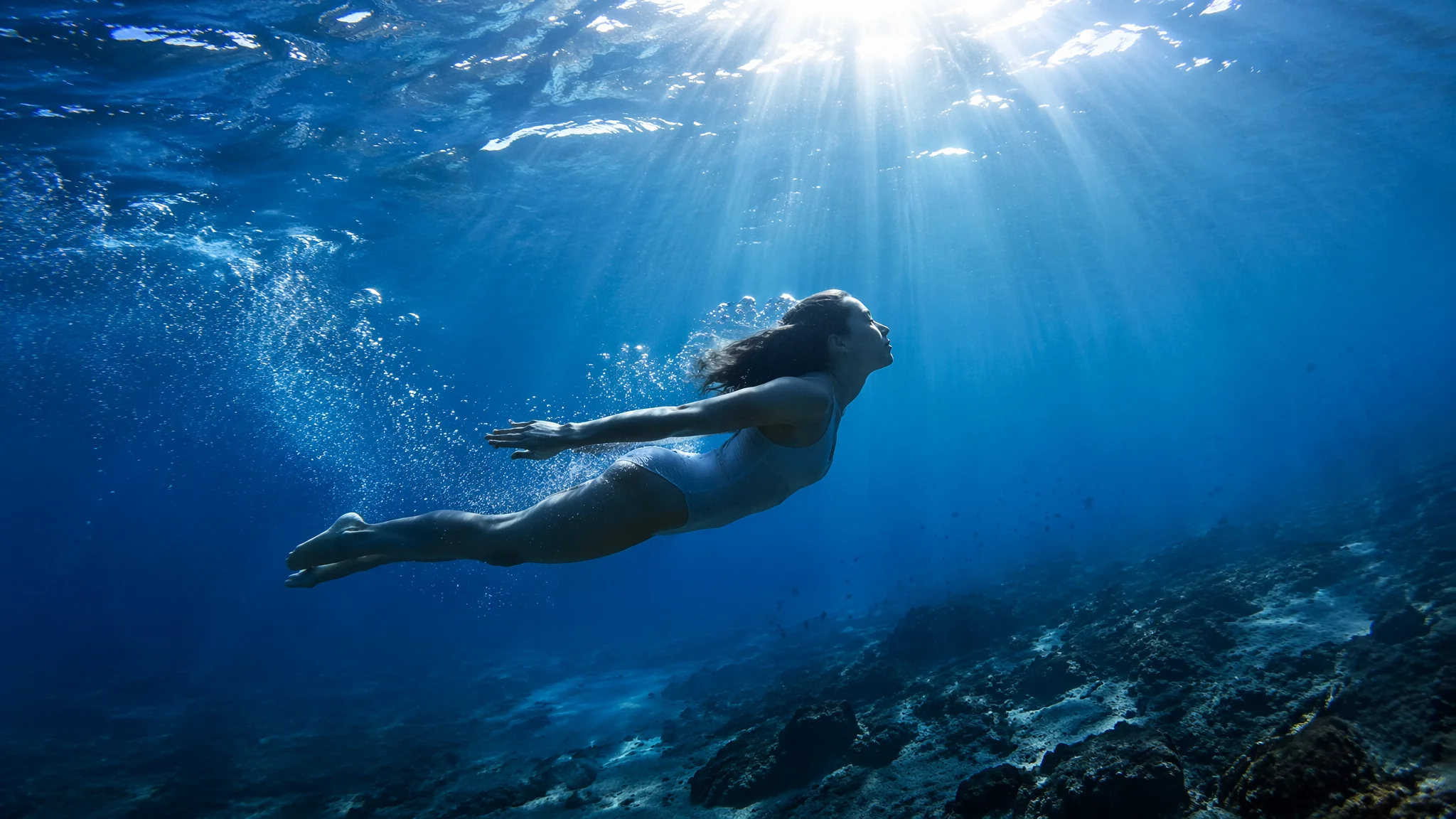
简单说:AI画水下场景最头疼的三件事——人物变形、光线不对、水的感觉出不来。人物变形靠"underwater refraction""caustic light patterns on skin"来合理化,光线不对靠"volumetric god rays penetrating water surface"来还原真实水下光照,水的感觉靠"floating particles""bubbles""blue-green color cast"来营造沉浸感。这三板斧砍下去,水下画面就活了。
去年夏天我跟朋友去三亚潜水,第一次背着氧气瓶下到十五米深的地方。那个画面我到现在都忘不了——阳光从海面打下来变成一道道光柱,周围全是悬浮的微粒,鱼群从我身边游过去的时候身上的鳞片把光线折射成彩虹碎块。上岸后我迫不及待用AI试图复刻那种感觉。结果呢?AI给了我一个蓝色的房间里飘着一个人的恐怖片画面。水下的光影逻辑跟陆地上完全不同,AI如果不被精确引导,根本不理解"水深"这个概念。
水下光线的物理逻辑:为什么不能只写"underwater lighting"
水下光线的核心规律就一条:水越深,红色光衰减越厉害,画面越偏蓝绿——你不把这个逻辑写进提示词,AI就给你一个陆地上的晴天场景只是把背景涂成蓝色。浅水区(0-5米)的光线关键词:"shallow crystal clear pool water, bright sunbeams penetrating water surface creating dancing caustic patterns on the bottom, warm skin tones still visible, turquoise water color with high transparency"。中水区(5-15米)的光线关键词:"mid-depth underwater, diffuse soft blue-green light from above, skin appearing more cyan-toned due to red light absorption, schools of fish silhouetted against brighter surface"。深水区(15米以下):"deep blue abyss with only faint light from far above, mysterious dark water, beam of light from diver's flashlight cutting through the darkness, dramatic high contrast single light source"。光线关键词里最神奇的是"caustics"——这个词指的是水面波纹在池底投射出的网状光斑,加上它之后水下的"水感"立刻对味。光影技法的更多内容在AI绘画光影技法深度解析里有系统性讲解。
水下人体:折射变形与动态姿态的平衡术
水下人体的两个核心难点:水的折射会让肢体比例变奇怪,AI如果不加约束会给你解剖学灾难。解决折射变形的方法是"提前承认它"——在提示词里写明:"underwater refraction creating slight visual distortion of body proportions, natural swimmer pose, limbs appear slightly magnified and shifted by water optics"。与其让AI去隐藏折射,不如让它把折射作为一种视觉风格来表现。动态姿态的关键词:"graceful freestyle swimming stroke, body streamlined and horizontal in water, trail of bubbles from exhaled breath, dynamic tension in extended arms and kicking legs, athletic yet elegant"。静浮姿态:"floating weightlessly suspended in clear water, hair drifting freely upward, relaxed serene facial expression, arms gently extended, peaceful underwater meditation pose"。人体渲染最难的就是手和脚,在水下手的变形尤其严重——我试过让AI画一个潜水员比OK手势,出来的手指数量从三根到七根不等。解决办法是把手的动作描述得尽量简单,写"hands relaxed and slightly cupped"比写"hand making a specific gesture"安全得多。AI角色设计与人物绘画全攻略里对肢体细节有专门的处理技巧。
气泡与悬浮微粒:"水感"的秘密武器
一张水下画有没有"水感",80%取决于三个小元素:气泡、悬浮微粒和漂浮物(头发、衣摆、水草)。气泡关键词:"scattered air bubbles of varying sizes rising toward surface, silvery bubble trails following the swimmer's movement, tiny champagne-like bubbles clinging to skin and swimsuit"。悬浮微粒:"floating particles and plankton specks suspended in water illuminated by sun rays, underwater snow effect, marine dust creating visible light shafts in the water column"。漂浮物:"long hair floating upward in water, loose fabric of swimsuit billowing gently with underwater currents, seaweed and kelp swaying at the edges"。这三个元素里气泡是最重要的——它给了画面一个"垂直方向感",让观众下意识知道哪边是水面。反过来,如果一幅水下画里没有气泡也没有漂浮物,脑子会困惑它到底是不是在水下。细节方面可以参考AI绘画水面与水滴渲染完全指南。
泳池美学 vs 海洋美学:两套完全不同的提示词体系
泳池和海洋在水下绘画里是两种审美——泳池偏几何、人工、高饱和;海洋偏有机、自然、深邃。泳池风:"crystal clear swimming pool underwater, geometric blue tile patterns on pool floor, clean chlorinated water with high visibility, pool lane lines visible through the water, bright artificial turquoise color, modern luxury pool aesthetic"。海洋风:"open ocean underwater scene, natural deep blue water with organic visibility decrease, coral reef and tropical fish in background, sun rays filtering from surface through vast water column, sense of infinite depth and freedom"。还有一个有趣的混搭方向——"abandoned flooded building underwater exploration, eerie beauty of sunken architecture, murky water with floating debris, shaft of light from broken roof"。废弃建筑潜水这个细分风格在小红书上特别火,氛围感极强。不同场景风格的更多玩法可以看AI奇幻场景绘画全攻略。
泳衣与服装的水下表现:材质和动态的双重挑战
水下服装的表现取决于两个因素:面料材质和水的浮力——棉麻吸水下沉、尼龙浮水飘动、薄纱半透明漂浮。运动泳衣:"professional swimmer in sleek racing swimsuit, lycra fabric with minimal drag, streamlined silhouette cutting through water, competitive swimming aesthetic"。飘逸裙装:"flowing white dress floating ethereally underwater, translucent fabric billowing with gentle water movement, fairy-like weightless garment, dreamy romantic underwater fashion"。潜水装备:"scuba diver in full diving gear, wetsuit with bright accents for visibility, oxygen tank and regulator visible, mask reflecting underwater scenery, functional professional diving equipment"。穿潜水装备的图有一个额外好处——面镜和呼吸器遮住了AI最容易画崩的面部五官,反而让画面更真实可信。关于服装和面料的AI渲染,V&A博物馆的时尚与纺织品馆藏提供了大量可供参考的服装结构和面料质感资料。水下光影的物理原理建议翻翻NOAA海洋服务关于光线在水中衰减的科学解释,理解了红色光在5米以下就开始消失这个事实之后,你写水下提示词的光线逻辑会准得多。
常见问题
水下AI绘画的高频问题涉及人物结构、水体质感和工具选择,逐一解答。为什么AI画的水下人物总是像在空气中漂浮?
缺了两样东西:水的色彩偏移(color cast)和悬浮元素(气泡/微粒)。在提示词里必须加"blue-green color cast typical of underwater photography""tiny bubbles and floating particles suspended in the water column"。另外在negative prompt里排除"dry hair, hair not floating, standing pose, feet touching ground"能有效杜绝"陆地上的人泡在水里"的效果。
水下绘画人物面部总是崩怎么办?
三个策略:第一,让人物戴潜水面镜或泳镜,遮住最难画的眼睛区域;第二,用侧影或背影构图避开面部;第三,写"face partially obscured by water refraction and bubbles",把模糊当做风格的一部分。如果非要清晰面部,用SD的ADetailer插件对面部做单独修复。
泳池场景和海洋场景哪个更好画?
泳池场景比海洋简单得多——因为元素少、光线逻辑单一、不需要画复杂的珊瑚和鱼群。新手建议从泳池开始练手,等把水波折射和人体姿态的基本功练好了再挑战海洋场景。
觉得有用的话分享给朋友吧。